вторник, 30 ноября 2021 г.

Witness in the corruption case in the Ministry of Industry and Trade did not live to see the trial

A friend of Denis Manturov, a member of the executive committee of the ROC Vlasenko, promised a short term for silence


As it became known to the VChK-OGPU telegram channel and Rucriminal.info, the ICR completed the investigation of the criminal case against the deputy head of the department of the Ministry of Industry and Trade Olga Pokidysheva, ex-head of the department Olga Kolotilova, a member of the executive committee of the Russian Olympic Committee, president of the Synchronized Swimming, Water Polo and Jumping Federations water of Aleksey Vlasenko and a number of businessmen. They are already getting acquainted with the materials of the case. In total, they are accused of embezzling budget money in the supply of drugs.


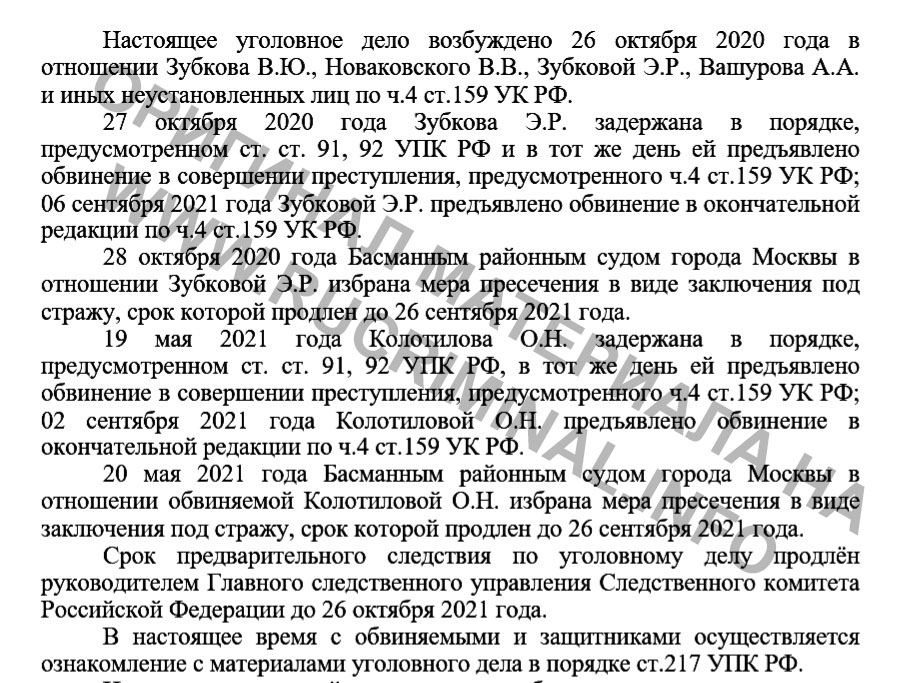
The criminal case was initiated by the TFR back in October 2020. The FSB of the Russian Federation conducts operational support on it. According to the investigation, the Zubkov family, which controlled a number of pharmaceutical companies, through intermediaries managed to agree that the Ministry of Industry and Trade would conclude several government contracts with the structures controlled by the brothers for the purchase of medicines. During the execution of government contracts, more than 500 million rubles were stolen. In reality, no medicines were supplied for such an amount. In November 2020, there was Vladimir Zubkov, his wife, V.V. Novakovsky, A.A. Vashurov.

At first, Zubkov denied his guilt, but then he began to cooperate with the investigation. He said that government contracts were obtained as a result of corrupt actions of senior officials of the Ministry of Industry and Trade. We managed to obtain the state control orders with the help of intermediaries who had connections in the department. The main mediator was Alexey Vlasenko, who had a lot of acquaintances in the Ministry of Industry and Trade. In March, Vlasenko was arrested. And in May, it was the turn of the executors from the Ministry of Industry and Trade, those who organized government contracts for the Zubkovs' structures. Pokidysheva and Kolotilova went into custody.

In the summer of 2021, Zubkov, who made a deal with the investigation, died in a pre-trial detention center. His wife was not allowed to attend the funeral.

The first that the arrests of the deputy head of the department of the Ministry of Industry and Trade Olga Pokidysheva, the ex-head of the department Olga Kolotilova and the president of the Russian Federation of the Water Floor Alexei Vlasenko, a close friend of Minister Denis Manturov, are connected and are episodes of one high-profile case leading to the minister, - said the Cheka-OGPU ...


The most interesting figure in this group is undoubtedly Vlasenko. “Chief fixer of the Ministry of Industry and Trade; chief pimp under the government; a close friend and "decided" under Manturov and Mazepin, "- this is how Rucriminal.info sources characterize him. Actually, they took Vlasenko because the paths from him led directly to Denis Manturov's office. “The employees of the SEB FSB RF have a full invoice, including all the correspondence, how much went to the very top for the decision on drugs. How much to the rest, ”the source said. Vlasenko himself refused to cooperate and give evidence against Mayeturov's friend. According to sources, he has guarantees from high-ranking friends that he will not stay in prison for too long.

Then, with Zubkov, who was also aware of who was paid and how much, they began to actively work in the pre-trial detention center. He concluded a pre-trial agreement, but for the time being he was silent about the recipients of the money. And when he was "ripe", he suddenly died in a pre-trial detention center.

It is worth noting that Zubkov's wife, who is in custody, is an Israeli citizen, which gives the investigation reason to put forward a version of her possible leaving the country if she were free.

The woman's lawyers insist that she was not involved in the crime and was the nominal owner of the company (involved with schemes for the supply of drugs for the funds of the Ministry of Industry and Trade, which was registered with her at the insistence of her husband. She had no intention of committing a crime, she only signed documents, which her husband gave her, while she trusted the latter and did not doubt the legality of his actions.

Zubkov's partner Vladimir Novakovsky has fully admitted guilt, gives confessions, a pre-trial cooperation agreement has been concluded with him. Despite this, he continues to remain in custody. The ICR explains this by the fact that Novakovsky actively involved other persons in criminal activities, taking measures to conceal facts and evidence, and, being at large, he can hide from the investigation and the court, put pressure on the participants in criminal proceedings, get in touch with unidentified accomplices , destroy evidence, hide property obtained as a result of a crime, otherwise interfere with the proceedings.


To be continued

Timofey Grishin

Свидетель по делу о коррупции в Минпромторге до суда не дожил

Другу Дениса Мантурова, член исполкома ОКР Власенко за молчание обещан маленький срок


Как стало известно телеграм-каналу ВЧК-ОГПУ и Rucriminal.info, СКР завершил расследование уголовного дела в отношении замглавы департамента Минпромторга Ольги Покидышевой, экс-начальника департамента Ольги Колотиловой, члена исполкома Олимпийского комитета России, президента Федераций синхронного плавания, водного поло и прыжков в воду Алексея Власенко и ряда бизнесменов. Они уже знакомятся с материалами дела. Всего они обвиняются в хищениях бюджетных денег при поставках лекарств.


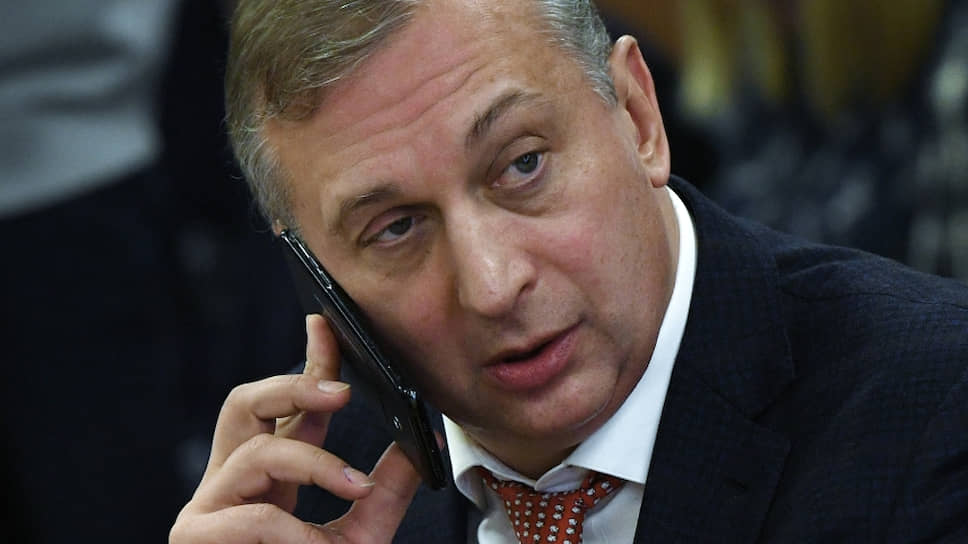
Алексей Власенко


Уголовное дело было возбуждено СКР еще в октябре 2020 года. Оперативное сопровождение по нему ведет ФСБ РФ. По версии следствия, семья Зубковых, контролировавшая ряд фармацевтических компаний, через посредников сумели договориться, что Минпромторг заключит несколько госконтрактов с подконтрольными братьям структурам на закупку медикаментов. При исполнении госконтрактов было похищено более 500 млн рублей. На такую сумму в реальности медикаменты не были поставлены. В ноябре 2020 года был Владимир Зубков, его супруга, Новаковский В.В., Вашуров А.А.

Сначала Зубков отрицал вину, но потом стал сотрудничать со следствием. Он рассказал, что госконтракты были получены в результате коррупционных действий руководящих сотрудников Минпромторга. Госконтркты удалось получить при помощи посредников, имеющих связи в ведомстве. Основным посредником выступал Алексей Власенко, имеющих массу знакомых в Минпромторге. В марте Власенко был арестован. А в мае дошла очередь до исполнителей из Минпромторга, тех, кто организовал госконтракты для структур Зубковых. Под стражу отправились Покидышева и Колотилова.

Летом 2021 года Зубков, заключивший сделку со следствием, умер в СИЗО. Его жену на похороны не отпустили.

Первым о том, что аресты замглавы департамента Минпромторга Ольги Покидышевой, экс-начальника департамента Ольги Колотиловой и президент Федерации водного пола РФ Алексей Власенко-близкого друга министра Дениса Мантурова- связаны и являются эпизодами одного громкого делу, ведущего к министру, - рассказал ВЧК-ОГПУ.


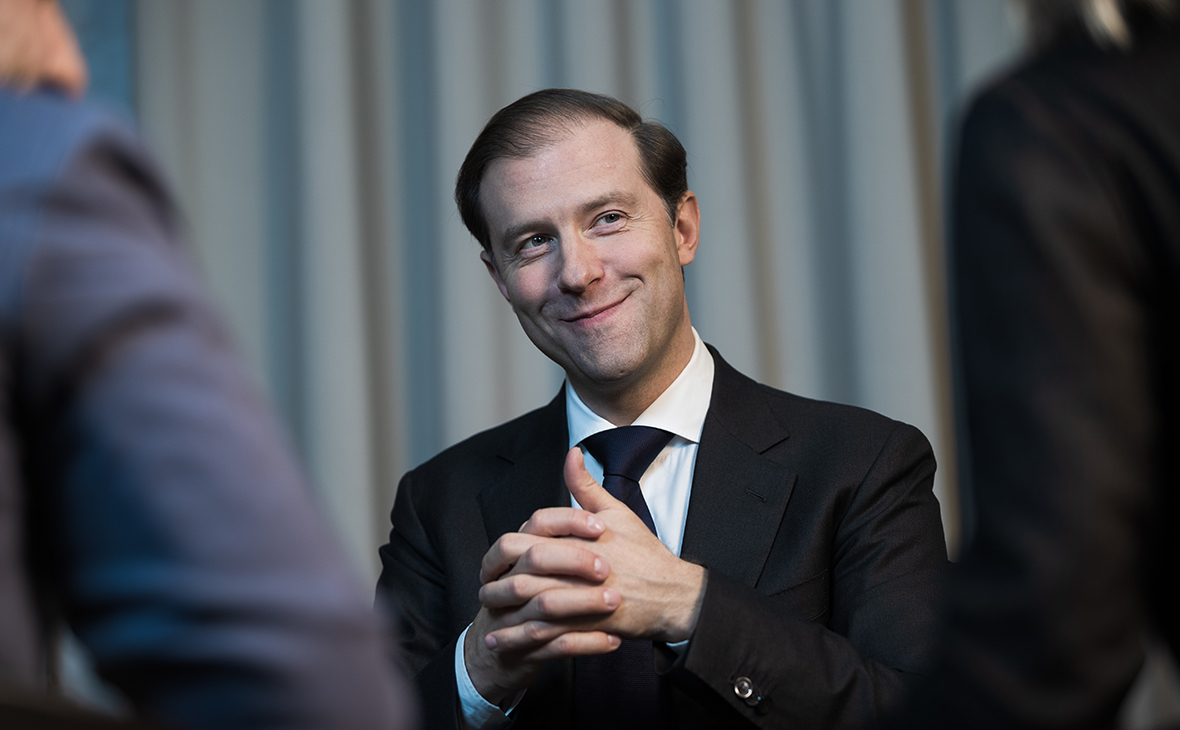
Денис Мантуров


Самой интересной фигурой в этой группе, безусловно, является Власенко. «Главный решальщик Минпромторга; главный сутенер при правительстве; близкий друг и «решала» при Мантурове и Мазепина», - так его характеризуют источники Rucriminal.info. Собственно, и взяли Власенко потому что пути от него прямо вели в кабинет Дениса Мантурова. «У сотрудников СЭБ ФСБ РФ есть полная фактура, включая всю переписку, сколько ушло на самый верх за решение по лекарствам. Сколько остальным», - отмечает собеседник издания. Сам Власенко сотрудничать и даватть показания на друга Маетурова отказался. По информации источников, у него есть гарантии от высокопоставленных друзей, что слишком долго он в заключении не задержится.

Тогда с Зубковым, который тоже был в курсе, кому и сколько платилось, в СИЗО начали проводить активную работу. Он заключил досудебное соглашение, но про получателей денег до поры молчал. А когда «созрел», то неожиданно умер в СИЗО.

Стоит отметить, что находящаяся под стражей супруга Зубкова является гражданкой Израиля, что дает повод следствию выдвигать версию о ее возможном уезде из страны, окажись она на свободе.

Адвокаты женщины настаивают, что она не причастна к совершению преступления и являлась номинальным владельцем фирмы (задействованы с схемах по поставке лекарств на средства Минпромторга , которая была на нее оформлена по настоянию супруга. Умысла на совершение преступления у нее не было, она только подписывала документы, которые ей давал муж, при этом доверяла последнему и не сомневалась в законности его действий.

Партнер Зубкова Владимир Новаковский полностью признал вину, дает признательные показания, с ним заключено досудебное соглашение о сотрудничестве. Несмотря на это он продолжает оставаться под стражей. СКР объясняет это тем, что Новаковский активно вовлекал иных лиц в преступную деятельность, принимая меры к сокрытию фактов и доказательств, а, находясь на свободе, он может скрыться от следствия и суда, оказать давление на участников уголовного судопроизводства, войти в контакт с неустановленными соучастниками, уничтожить доказательства, сокрыть имущество, полученное в результате совершения преступления, иным путем воспрепятствовать производству по делу.


Продолжение следует

Тимофей Гришин

Источник: www.rucriminal.info

понедельник, 29 ноября 2021 г.

"Will be the main evidence in the big" Rusnano case "

We publish the full list of "partners of Anatoly Borisovich Chubais"


The Telegram channel VChK-OGPU and Rucriminal.info have already written about the greatest and failed scam associated with the privatization of Rusnano Management Company LLC. Today we will supplement everything that has been said previously with important details.

Earlier, the role of Nathan Shklyar, a partner of the American company "Bain" in Moscow, a representative of Bain's international practice in working with private equity funds, was unjustly kept silent. In vain, after all, it was Nathan's ideas to create a fund, collected "for Chubais" from public and private money, but managed by a private company, where Anatoly Borisovich himself is the key shareholder that charmed Chubais.


Nathan not only proposed the idea of ​​partnership, but at one of his personal meetings presented Chubais with a draft of the Partnership agreement, which includes the subject of the agreement, goals, objectives and even a mechanism for resolving disagreements between Partners through an arbitrator. The final version of the agreement was prepared by Rusnano's lawyers, Ruben Karlenovich Vardanyan was asked to act as the arbiter of the agreement. The document was prepared in the strictest confidentiality - so the draft agreement was not sent by mail, but passed from reception to reception in a sealed envelope.

However, Rucriminal.info sources know its content. According to them, the idea of ​​a written agreement did not make the Partners happy, but only the deputy chairman of the board of Rusnano Vladimir Avetisyan could refuse the boss, the rest accepted the rules of the game, although some with reservations: the deputy chairman of the board of RUSNANO Boris Podolsky was very proud of the trust and was ready sign an agreement in any edition. The cautious Oleg Kiselev thought for a long time: he consulted with the lawyer Asnis, carefully punctured the mood of other partners and timidly tried to put the brakes on the venture with partnership. But Chubais's assertiveness was always stronger than Kiselev's caution, and the agreement was signed, and A.B. Chubais, O. V. Kiselev, Yu.A. Udaltsov and B.G. Podolsky became Partners. Later, A.V. Trapeznikov, A.B. Kalanov and D.A. Pimkin.


The partnership agreement signed by members of the Management Board of Rusnano and A. Chubais may become an important evidence of the prosecution in a large criminal case against Rusnano.

But the strange choice of Partners is striking and there is a desire to figure out why A.B. Chubais, surrounded by strong business partners in RAO UES of Russia, remained in such a not presentable company by the end of 2014?

Where did the RAO UES team go and why did the old energy partners not help Chubais develop nanotechnology?

V.G. Zavadnikov. In the summer of 1998, Valentin Georgievich Zavadnikov (Valya) was appointed Deputy Chairman of RAO UES of Russia, which came as a real shock to the venerable industrial generals from the power industry and left an indelible mark on the history of RAO UES.


Firstly, it was Valya who introduced the practice of so-called “homework assignments, or in abbreviated form - DZ” - this is when the general director of an energy company is given a specific task to contribute cash to the corporate black box office. DZ transformed into a kickback system and by 2000 each contractor understood that from 10 to 30% of what was received under the contract would have to be returned. Probably, corruption to one degree or another has always been present in the energy sector: there were gifts from contractors and the appointment of the right people, but it was Valya who made it manageable from the very top. It was RAO UES of Russia that became the first company in Russia to completely take control of financial flows.

Secondly, the team. It was Valya who formed a block of managers responsible for reform and corporate governance: O. Oksuzyan, V. Sinyugin, Yu. Udaltsov, and others.

Third, the concept of the market and reform. Some will say that the concepts of the energy sector reform in 2000 and 2008 are very different. Don't go into trifles - the concept of the RAO UES reform was laid by Zavadnikov!

In September 2001, Valya left RAO UES for the Federation Council, but at the same time remained a member of the working group of the Presidium of the State Council of the Russian Federation on reforming the electric power industry.

Valya too quickly and swiftly went to the higher floors, and after that the scale of RAO UES, and even more so the scale of Rusnano, ceased to correspond to it.

M.A. Abyzov. In 2014 Abyzov M.A. He is also the Minister of the Open Government of Russia, he is always ready to support A. Chubais, and Chubais has always reciprocated him, but the partnership between Rusnano is far from the ambitions of the young minister.


Melamed L.B., Urinson Ya.M., Rappoport A.N., Avetisyan are old and proven leaders who have worked a lot as deputies of Chubais A.B. in RAO "UES of Russia". All four took part in the work of Rusnano in one way or another.

Melamed L.B. was the first general director of the State Corporation "Rosnanotech" and after A. Chubais came to Rusnano, he could probably remain Chubais's first deputy if he wanted to. But he didn’t want to: at first, ambition and the erroneous bet on the fact that it was possible to control the flows of the corporation without being in its governing bodies. By 2012, I probably would have already returned, but a new team has formed in Rusnano with its own ideology of an “eternal fund”, which is different from the worldviews of L.B. Melamed. Chubais did not want to open a new dispute, and Melamed did not enter the partnership.

In 2014, Melamed L.B. supervised one of Rusnano's projects - the company HC Composite JSC and tried to find satisfaction in this.

Urinson Ya.M. Until the end of 2008, he carried out a special assignment from A. Chubais - in the status of the head of the Project Center, he "closed" RAO "UES of Russia" back office of the company. An absolutely loyal and trusted person, Urinson. nevertheless, he ceased to fit into Chubais's new, progressive ideas about the methods of company management and his functional responsibilities were gradually reduced: in 2010, first the financial unit was removed from his subordination, then the personnel management unit.

For family reasons, in 2011, J. Urinson moved to an advisor with very narrow and specific powers.

Rappoport A.N. he was not just a deputy chairman at RAO UES, but also a chairman of the board at the Federal Grid Company. Moreover, as the head of FGC UES, he held out the longest in the post-reform energy sector.

In 2012-2013, Andrei Natanovich managed to work as First Deputy Chairman of the Management Board of OJSC Rusnano, in charge of investment activities (in this position, he replaced Andrei Malyshev, who left the company due to disagreements with A. Chubais).

The arrival of A. Rappoport coincided with problems at the largest projects of Rusnano, such as: Usolye-Siberian Silicone, Plastic Logic, Liotech, Optogan, Mikron, etc. Personal Risks and Company Prospects A. Rappoport returned to the Skolkovo Moscow School, where he still works.

Avetisyan V.E. - Samara businessman, drafted by V.G. Zavadnikov, first to manage the energy sector of the Samara region, and then the entire Volga region. In 2004, V.E. Avetisyan moves to Moscow and becomes one of the key leaders of RAO UES, he heads Business Unit No. 2, and at the same time creates the Quartz group of companies on the fragments of repair subsidiaries spun off from regional energy companies. After the reorganization of RAO UES of Russia, Avetisyan V.E. works in the Russian Technologies State Corporation, where he oversees energy conservation and energy efficiency projects. Obviously, the arrival of V. Avetisyan in Rusnano was a matter of time, and such a arrival took place at the end of 2013 .. It took experienced Avetisyan 2 months to assess the state of affairs: “There is no money, there are no prospects, too, there is nothing to catch here.”

The disappointment was mutual: Chubais sincerely did not understand why his old comrades-in-arms, accustomed to and capable of solving complex managerial problems, after working from 2 months to a year, fled from Rusnano at breakneck speed. Chubais was already forming a new team in a state of "time pressure", and it was not an easy task: the power engineers disappointed, seasoned investment managers bypassed the state-owned company - they knew too well the principles of Rusnano's investment in the market and adequately predicted the future of the corporation, young and ambitious investment directors received their first experience and fearing to lose their reputation, they tried to go “into the market”.

However, A. Chubais created his own team. I worked. Where to attach bonds now?

Timofey Grishin

To be continued

Source: www.rucriminal.info

«Станет главным доказательством в большом «деле Роснано»

Публикуем полный список «партнеров Анатолия Борисовича Чубайса»


Телеграм-канал ВЧК-ОГПУ и Rucriminal.info уже писали о величайшей и несостоявшейся афере, связанной с приватизацией ООО «УК «Роснано». Сегодня дополним все ранее сказанное важными деталями.

Ранее несправедливо умолчали о роли Натана Шкляра - партнера американской компании "Bain" в Москве, представителя международной практики Bain по работе с фондами прямых инвестиций. Зря, ведь именно идеи Натана о создании фонда, собранного «под Чубайса» из государственных и частных денег, но находящегося под управлением частной компании, где ключевым акционером выступает сам Анатолий Борисович очаровали Чубайса.


Натан Шкляр


Натан не только предложил идею партнерства, но и на одной из личных встреч представил Чубайсу черновик соглашения Партнеров, включающий в себя предмет соглашения, цели, задачи и даже механизм разрешения разногласий между Партнерами через арбитра. Окончательную редакцию соглашения подготовили юристы Роснано, арбитром по соглашению попросили выступить Рубена Карленовича Варданяна. Документ готовился в режиме строжайшей конфиденциальности - так проект соглашения не пересылался по почте, а передавался из приемной в приемную в запечатанном конверте.

Однако, источники Rucriminal.info знают его содержание. По их словам, идея письменного соглашения Партнеров не порадовала, но отказать начальнику смог только заместитель председателя правления «Роснано» Владимир Аветисян, остальные приняли правила игры, правда некоторые - с оговорками: заместитель председателя правления РОСНАНО Борис Подольский был очень горд оказанным доверием и готов был подписать соглашение в любой редакции. Осторожный Олег Киселев думал долго: консультировался с адвокатом Аснисом, аккуратно пробивал настроение других партнеров и робко пытался затею с партнерством спустить на тормозах. Но напористость Чубайса всегда была сильнее осторожности Киселева и соглашение было подписано, а А.Б. Чубайс, О.В. Киселев, Ю.А. Удальцов и Б.Г. Подольский стали Партнерами. В дальнейшем статус младших партнеров получили А.В. Трапезников, А.Б. Каланов и Д.А. Пимкин.


Владимир Аветисян


Партнерское соглашение, подписанное членами Правления Роснано и А. Чубайсом, может стать важным свидетельством обвинения в большом уголовном деле Роснано.

Но бросается в глаза странный выбор Партнеров и возникает желание разобраться почему А.Б. Чубайс, окруженный в РАО «ЕЭС России» крепкими бизнес-партнерами, к концу 2014 года остался в столь не презентабельной компании?

Куда делась команда РАО ЕЭС и почему старые партнеры-энергетики не помогли Чубайсу развить нанотехнологии?

В.Г. Завадников. Летом 1998 года зампредом РАО «ЕЭС России» был назначен Валентин Георгиевич Завадников (Валя), что стало настоящим шоком для почтенных промышленных генералов от энергетики и оставило неизгладимый след в истории РАО ЕЭС.


Валентин Завадников


Во первых, именно Валя ввел практику так называемых «домашних заданий или сокращенно - ДЗ» - это когда генеральному директору энергокомпании ставится конкретное задание по взносу наличных денег в корпоративную черную кассу. ДЗ трансформировались в систему откатов и уже к 2000 году каждый подрядчик понимал, что от 10 до 30% полученного по контракту придется вернуть. Наверное, коррупция в той или иной степени всегда присутствовала в энергетике: были подарки от подрядчиков и назначение нужных людей, но именно Валя сделал ее управляемой с самого верха. Именно РАО «ЕЭС России» стала первой компанией в России полностью взявшей под контроль финансовые потоки.

Во вторых, команда. Именно Валя сформировал блок управленцев, отвечающих за реформу и корпоративное управление: О. Оксузьян, В. Синюгин, Ю. Удальцов и др.

В третьих, концепция рынка и реформы. Кто-то скажет, что концепции реформы энергоотрасли 2000 года и 2008 года сильно отличаются. Не уходите в мелочи – концепцию реформы РАО ЕЭС заложил Завадников!

В сентябре 2001 года Валя ушел из РАО ЕЭС в Совет Федерации, но при этом оставался членом рабочей группы президиума Государственного совета Российской Федерации по вопросам реформирования электроэнергетики.

Валя слишком быстро и стремительно ушел на высшие этажи, и после этого и масштабы РАО ЕЭС, и тем более масштабы Роснано перестали ему соответствовать.

М.А. Абызов. В 2014 году Абызов М.А. еще Министр Открытого Правительства России, он всегда готов поддержать А. Чубайса, да и Чубайс всегда отвечал ему взаимностью, но партнерство Роснано сильно не дотягивает до амбиций молодого министра.


Михаил Абызов


Меламед Л.Б., Уринсон Я.М., Раппопорт А.Н., Аветисян – старые и проверенные руководители, много поработавшие заместителями Чубайса А.Б. в РАО «ЕЭС России». Все четверо так или иначе поучаствовали в работе Роснано.

Меламед Л.Б. был первым генеральным директором ГК «Роснанотех» и после прихода А. Чубайса в Роснано, наверное, смог бы остаться первым заместителем Чубайса если бы захотел. Но не захотел: сначала сыграли амбиции и ошибочная ставка на то, что можно контролировать потоки корпорации, не находясь в органах ее управления. К 2012 году, наверное, уже бы и вернулся, но в Роснано сформировалась новая команда со своей идеологией «вечного фонда», отличной от мировоззрений Л.Б. Меламеда. Чубайс не захотел открывать новый спор, а Меламед не вошел в партнерство.

В 2014 году Меламед Л.Б. руководил одним из проектов Роснано – компанией АО «ХК Композит» и пытался найти в этом удовлетворение.

Уринсон Я.М. до конца 2008 года выполнял особое поручение А.Чубайса – в статусе руководителя Проектного центра он «закрывал» РАО «ЕЭС России» и только к началу нового 2009 года смог выйти на работу в ГК «Роснанотех» в должности заместителя генерального директора, курирующего финансы и бэк-офис компании. Будучи абсолютно преданным и доверенным человеком, Уринсон. тем не менее, перестал вписываться в новые, прогрессивные представления Чубайса о методах управления компанией и его функциональные обязанности постепенно сокращались: в 2010 году из его подчинения вывели сначала финансовый блок, затем блок управления персоналом.

По семейным обстоятельствам в 2011 году Я. Уринсон перешел в советники с весьма узкими и специфическими полномочиями.

Раппопорт А.Н. был не просто зампредом в РАО ЕЭС, но и председателем Правления в Федеральной сетевой компании. Причем как руководитель ФСК ЕЭС он дольше всех продержался в постреформенной энергетике.

В 2012-2013 году Андрей Натанович успел поработать первым заместителем председателя Правления ОАО «Роснано», курирующим инвестиционную деятельность (на этой должности он сменил Андрея Малышева, покинувшего компанию из-за разногласий с А. Чубайсом).

Приход А. Раппопорта совпал с проблемами на крупнейших проектах Роснано, таких как: «Усолье-Сибирский силикон», «Пластик Лоджик», «Лиотех», «Оптоган», «Микрон» и др. Получив вызов на допрос в Следственный комитет, оценив личные риски и перспективы компании А. Раппопорт вернулся в Московскую школу Сколково, где работает по настоящее время.

Аветисян В.Е. – самарский бизнесмен, призванный В.Г. Завадниковым сначала для руководства энергетикой Самарской области, а затем и всего Поволжья. В 2004 году Аветисян В.Е. переезжает в Москву и становится одним из ключевых руководителей РАО ЕЭС, он возглавляет Бизнес-единицу №2, параллельно на осколках ремонтных дочек, выделенных из региональных энергокомпаний, создает группу компаний «Кварц». После реорганизации РАО ЕЭС России Аветисян В.Е. работает в ГК «Ростехнологии», где курирует проекты энергосбережения и энергоэффективности. Очевидно, что приход В. Аветисяна в Роснано был делом времени и такой приход состоялся в конце 2013 года.. Опытному Аветисяну хватило 2 месяца, чтобы оценить состояние дел: «Денег нет, перспектив – тоже, ловить тут – нечего».

Разочарование было взаимным: Чубайс искренне не понимал почему его старые соратники, привыкшие и способные решать сложные управленческие задачи поработав от 2 месяцев до года бежали из Роснано сломя голову. Новую команду Чубайс формировал уже в состоянии «цейтнота», а это была непростая задача: энергетики - разочаровали, матерые инвестиционщики обходили госкомпанию стороной – на рынке слишком хорошо знали принципы инвестирования Роснано и адекватно прогнозировали будущее корпорации, молодые и амбициозные инвестиционные директора получив первый опыт и боясь потерять репутацию стремились уйти «в рынок».

Впрочем, А. Чубайс команду свою создал. Поработал. Куда бы теперь пристроить облигации?

Тимофей Гришин

Продолжение следует

Источник: www.rucriminal.info

воскресенье, 28 ноября 2021 г.

FSB reached Sergo Ordzhonikidze

University leaders got hold of dead souls


The FSB has completed a criminal investigation into a particularly large-scale fraud at the Russian Presidential Academy of National Economy and Public Administration (RANEPA). His key defendant is the director of the Institute of Civil Service and Management of the RANEPA Igor Bartsits, as well as his alleged accomplices - the dean of the faculty of public administration of the economy Svetlana Larina and the wanted native of Abkhazia Aslan Feyzba. The investigation accuses them of "theft of funds by systematically receiving them from subordinates for unjustified accrual of additional wages." According to some information, the damage in the case amounts to several million rubles, which the accused Bartsits, fully admitting his guilt, extinguished.


Sources of the VChK-OGPU telegram channel and Rucriminal.info said that the theft of funds with the help of "dead souls" in Russian Universities occurs everywhere. We acquaint our readers with already existing similar criminal cases.

I. FSBEI HE "Russian State Geological Prospecting University named after Sergo Ordzhonikidze" (hereinafter - MGRI).


1. The criminal case was initiated on February 12, 2020 under Part 4 of Art. 159 of the Criminal Code of the Russian Federation (fraud on an especially large scale with the use of official position) according to the report of the detective of the department of the South-Western Administrative District of the Federal Security Service of Russia for the city of Moscow and the Moscow region (seconded officer in MGRI).

The investigation of the criminal case was carried out by the Investigative Service of the FSB of Russia for the city of Moscow and the Moscow region, since the crime was revealed by the FSB officers.

2. Initially, the media suggested that the criminal case against the rector V.A. instituted for real estate fraud.


3. The real "basis" for initiating a criminal case was the fictitious employment of employees in various positions in the MGRI.

If initially a criminal case was initiated against 1 fictitiously employed employee, then by the end of the investigation, the investigation revealed 13 “dead souls”. The period of fictitious labor activity of "dead souls" is from 2016 to 2020.

An official of the Ministry of Science and Higher Education of the Russian Federation acted as a co-executor of the rector in two episodes of criminal activity (2 dead souls). Also, one of the employees of the MGRI is a co-executor of the crime in the case.

In addition, 2 persons who, according to the investigation, have found and brought to MGRI for fictitious employment of workers, are involved as accomplices in the commission of a crime.

Persons who were directly fictitiously employed are not brought to criminal responsibility as ignorant of criminal intentions.

The total amount of damage in the criminal case is 29,317,348.64 rubles.

4.On March 09, 2021, the Ministry of Science and Higher Education of the Russian Federation as the founder of MGRI was recognized as a victim in the criminal case. The victim's representative gets acquainted with all the materials of the criminal case.

5. At present, the requirements of Art. 217-219 of the Criminal Procedure Code of the Russian Federation, that is, familiarization of the accused with the materials of the criminal case.

II. "Fresh" criminal cases at the Universities that have been identified or are being investigated by the FSB.

1.February 17, 2021: Moscow Polytechnic University

The Investigative Department of the Investigative Committee of the Russian Federation in Moscow opened a criminal case on large-scale fraud (part 4 of article 159 of the Criminal Code of the Russian Federation) against employees of the Moscow Polytechnic University. They, according to the investigation, received 3.6 million rubles from the budget. for teaching people of pre-retirement age, but did not conduct classes.

The case was initiated on the basis of materials from an audit of one of the departments of the FSB administration in Moscow and the Moscow region.

2.16 February 2021: Institute of Civil Service and Management of the Russian Academy of National Economy and Public Administration under the President of the Russian Federation (RANEPA)

The Investigative Department of the FSB of Russia opened a criminal case for fraud against the Director of the said institute of RANEPA Igor Bartsits.

The scheme of embezzlement is the systematic receipt of money from subordinates for unjustified accrual of additional salaries to them. The investigation is over, the accused are starting to familiarize themselves.

To be continued

Denis Zhirnov

Source: www.rucriminal.info

ФСБ добралось до Серго Орджоникидзе

Руководители ВУЗов разжились мертвыми душами


ФСБ завершила расследование уголовного дела об особо крупном мошенничестве в Российской академии народного хозяйства и государственной службы при президенте РФ (РАНХиГС). Его ключевым фигурантом является директор Института госслужбы и управления РАНХиГС Игорь Барциц, а также его предполагаемые сообщники — декан факультета госуправления экономикой Светлана Ларина и объявленный в розыск уроженец Абхазии Аслан Фейзба. Следствие инкриминирует им «хищения денежных средств путем их систематического получения от подчиненных за необоснованное начисление дополнительной заработной платы». По некоторым данным, ущерб по делу составляет несколько миллионов рублей, который обвиняемый Барциц, полностью признав вину, погасил.


Игорь Барциц


Источники телеграм-канала ВЧК-ОГПУ и Rucriminal.info рассказали, что хищение средств при помощи «мертвых душ» в российских Университетах происходит повсеместно. Знакомим читателей с уже существующими аналогичными уголовным делами.

I. ФГБОУ ВО «Российский государственный геологоразведочный университет имени Серго Орджоникидзе» (далее – МГРИ).


1. Уголовное дело возбуждено 12 февраля 2020 года по ч. 4 ст. 159 УК РФ (мошенничество в особо крупном размере с использованием служебного положения) по рапорту оперуполномоченного отдела ЮЗАО УФСБ России по городу Москве и Московской области (прикомандированный сотрудник в МГРИ).

Расследованием уголовного дела занималась Следственная служба УФСБ России по городу Москве и Московской области, так как преступление выявили сотрудники ФСБ.

2. Первоначально в СМИ выдвигались предположения, что уголовное дело против ректора Косьянова В.А. возбуждено за махинации с недвижимостью.


Косьянова В.А. (слева)


3. Действительным «основанием» для возбуждения уголовного дела послужило фиктивное трудоустройство сотрудников на различные должности в МГРИ.

Если первоначально уголовное дело было возбуждено по 1 фиктивно трудоустроенному сотруднику, то к окончанию расследования следствием было выявлено 13 «мертвых душ». Период фиктивной трудовой деятельности «мертвых душ» – с 2016 по 2020 годы.

В качестве соисполнителя ректора по двум эпизодам преступной деятельности (2 мертвым душам) выступало должностное лицо Министерство науки и высшего образования РФ. Также соисполнителем преступления по делу проходит одна из сотрудниц МГРИ.

Кроме того, 2 лица, которые, по версии следствия, подыскали и привели в МГРИ для фиктивного трудоустройства работников, привлекаются в качестве пособников совершения преступления.

Лица, которые были непосредственно фиктивно трудоустроены, к уголовной ответственности не привлекаются как неосведомленные о преступных намерениях.

Общая сумма ущерба по уголовному делу составляет 29 317 348, 64 руб.

4. 09 марта 2021 года потерпевшим по уголовному делу признано Министерство науки и высшего образования РФ как учредитель МГРИ. Представитель потерпевшего знакомится со всеми материалами уголовного дела.

5. В настоящее время по уголовному делу идет выполнение требований ст. 217-219 УПК РФ, то есть ознакомление обвиняемых с материалами уголовного дела.

II. «Свежие» уголовные дела в Университетах, которые выявлены или расследуются ФСБ.

1. 17 февраля 2021: Московский политехнический университет

Следственное управление СКР по Москве возбудило уголовное дело о мошенничестве в особо крупном размере (ч. 4 ст. 159 УК РФ) в отношении сотрудников Московского политехнического университета. Они, по версии следствия, получили из бюджета 3,6 млн руб. за обучение людей предпенсионного возраста, но не проводили занятия.

Дело возбудили на основании материалов проверки одного из отделов управления ФСБ по Москве и Подмосковью.

2. 16 февраля 2021: Институт госслужбы и управления Российской академии народного хозяйства и государственной службы при президенте РФ (РАНХиГС)

Следственным управлением ФСБ России возбуждено уголовное дело по мошенничеству против Директора указанного института РАНХиГС Игоря Барцица.

Схему хищения - систематическое получение от подчиненных денежных средств за необоснованное начисление им дополнительной зарплаты. Расследование завершено, обвиняемые приступают к ознакомлению.

Продолжение следует

Денис Жирнов

суббота, 27 ноября 2021 г.

"Chef was flunked"

How Kostya Bolshoi killed the man Yuri Chaika and was covered from punishment


There are a lot of gaps in the materials of the case of the leader of the killer gang, Konstantin Piskarev (Kostya Bolshoi). From the volumes of the investigation, they directly cut out references to his connections with the special services about the behind-the-scenes of many crimes. Rucriminal.info and the VChK-OGPU telegram channel will fill these gaps. Thus, Konstantin Piskarev owned the Shchit and Sword restaurant, located directly opposite the FSB Directorate for Moscow and the region. It was in this restaurant that evenings, banquets, birthdays, etc. were held. Chekists of the Moscow region and not only. Many officials and businessmen knew Piskarev himself as an employee of the FSB.

Piskarev's senior friend and partner was Mikhail Ruzin (owner of Krylovsky bank and Capital Holding), who was closely associated with the FSB in Moscow and the Moscow region. In fact, he represented the interests of individual characters from this department in various projects. For example, Ruzin, who is listed in the databases of the RUOP of Moscow as an active member of the Solntsevo organized criminal group and a “close relationship” of one of the “authorities” of this organized criminal group, Alexei Molchanov, was the owner of Sergiev Posad.

Local officials and security officials danced to his tune. His "right hand" was Pisakrev. They got whatever they wanted. When the question arose about the allocation of a couple of regular plots of land for building, the head of the urban settlement Goncharov directly told his subordinates (this is in the case file): "these are not the people who can be refused." Mayor Maslov was at all their protege and business partner. And then Yevgeny Dushko appeared, who first dismissed Maslov, and after becoming mayor himself began to refuse Piskarev and Ruzin. In particular, he refused permission to build on those very plots of land. This couple threatened Dushko, pressed on him, but it was useless. Then Kostya Bolshoi came and shot Dushko. Piskarev is sitting, but Ruzin is not. Why? And this man is completely untouchable. He has long established close relations with representatives of the FSB in Moscow and the Moscow region. Moreover, his partners in dark deeds die one after another. Ruzin did business with the banker Oleg Zhukovsky. In December 2007, the banker's body was found on the territory of his cottage in the elite village of Lesnaya edge of the Odintsovo district. The housekeeper noticed Zhukovsky's corpse at the bottom of the pool, tied up and dressed in a tracksuit. Law enforcement officials ruled his death as an unusual suicide.

In 2009, the RF IC took up the story of embezzlement of budgetary funds in the Pushkin region, to which Ruzin was involved, and his partner in the theft of 554 million rubles perished. Ruzin's friend allegedly took his own life.

At one time, the deputy chairman of the MOO FSO "Dynamo" Alexander Rusanov attracted his friend Ruzin to the project for the reconstruction of the shooting club of the same name. It was planned to build residential houses on its territory. However, as a result of a series of sham deals using shell firms, the shooting club went bankrupt. The Dynamo lands began to be sold cheaply to the firms controlled by Ruzin. Rusanov realized that behind his back, a friend had carried out a grandiose scam. Rusanov began litigation. Shortly thereafter, the body of the deputy chairman of the MOO FSO "Dynamo" was found in the courtyard of his house. According to the official version, he threw himself out of the window of his apartment.

In this publication, Rucriminal.info returns to the topic of the murder of Marat Gazizov, director of the Scientific Center for Legal Information under the Ministry of Justice of the Russian Federation (NTSPI). He was personally shot by Kostya Bolshoi. The case file only mentions that Gazizov, on certain topics, communicated directly to the employees of the M Department of the FSB of the Russian Federation. And in the Ministry of Justice, all the state structures associated with him, Gazizov's orders were perceived as "orders of the leadership of the Ministry of Justice." However, why this was left out of the brackets of the case. Our sources have made it clear what's what. Marat Gazizov was a good friend of Yuri Chaika, who at the time of the events headed the Ministry of Justice. And the Scientific Center for Legal Information under the Ministry of Justice of the Russian Federation (NTSLI), headed by him, was a structure de facto controlled by the young Artyom Chaykes, the son of Yuri Chaika. And everyone knew Marat Gazizov as a person of the Chaika family. However, the family, having entered the business of selling the confiscated property, did not expect that they would find themselves in the very midst of the "90s".


The business was as follows. The property was valued at an underestimated value. It was sold at market value and the appraisal was necessarily paid to the budget. And the "top" was divided between the bailiffs, the RFBR and the company accredited with RFBR. In the jargon, such a pilezh was called "Mercedes" (as in 3 parts, like a Mercedes sign). Under Yuri Chaika, bailiffs (subordinate to the Ministry of Justice) began to take half, 25% went to the RFBR, and another 25% to an accredited company. Such a cut began to be called BMW.

When it became clear that the apartments of the head of Golden ADA Andrei Kozlenok (seven gigantic, exclusive apartments in the center of Moscow) would be put up for sale, a struggle began among the companies involved in the sale. However, the crayons and average players instantly went off topic. They were told that the main contenders are the "Chaika structure" (NTSPI) and the "solcevskih with the Chekists "(GKS). Trying to "butt" with one of them is suicide. Most of the market participants relied on the Chaika family.

When Chaika Gazizov's man was killed, everyone simply “opened their mouths” and waited for the development of events. But they did not happen. According to a Rucriminal.info source, the Chaek family felt that you couldn't earn all the money, but only one life. And they simply refused to earn money by selling the confiscated property. And they did the right thing. After that, many more players were killed, including officials. As for the murder of Gazizov, although everyone knew who was behind the crime, it remained unsolved for a very long time. And then at one point Kostya More ceased to be comfortable and necessary and was "closed".

As for the events that led to the murder of Gazizov, they developed as follows.


In 2004, GKS (Piskarev and Co) and perepala real "gold mine" - the seized property of the founder of the company Golden ADA Andrey Kozlenok. The latter was a participant in a mega-scam. With the permission of the head of Roskomdragmet Yevgeny Bychkov, the company Golden ADA was created in the United States, to which valuables from Goharn were transferred for 180 million dollars (gold coins, old silverware, jewelry with precious stones). Officially, the cost of the cargo was estimated at $ 180 million, but the operatives suspected that their real price exceeded $ 1 billion. The valuables were sold, but the money never arrived in Russia. All officials were taken out of the criminal case, and the court sentenced Kozlenok to six and a half years in prison.


In addition, the servants of Themis satisfied the claim to recover 54 million rubles from Andrei Kozlenok. As a result of this claim, seven elite apartments in Moscow that belonged to Kozlenok were seized. Kostya Bolshoi and a member of his organized crime group Sergey Bezrukov agreed that the property would go through the Global Computer Service (GKS). But then the director of the Scientific Center for Legal Information under the Ministry of Justice of the Russian Federation (NTSPI) Marat Gazizov intervened. He began to demand that the property go through the NCPI. During the meeting, he shared information about the machinations with an employee of the "M" Department of the FSB of the Russian Federation, who supervised the Ministry of Justice. After that, Piskarev decided to deal with him. He dressed in tattered black clothes. Pretended to be a vagabond and lay down at the entrance of Gazizov. When a service car arrived for that, Kostya Bolshoi shot him with a pistol.

After the murder of Gazizov, the GKS was re-registered the drinker Aleksey Poshkus, the apartments were sold for $ 4.7 million. Of these, 300 thousand went to the intermediary, 600 thousand were appropriated by Bezrukov, and the rest went to Kostya Bolshoi. The budget received only 24 thousand rubles.

Rucriminal.info acquaints readers with previously unpublished testimonies of the accused and witnesses in the Kostya Bolshoi case.

The testimony of the witness LV Belenko, according to which on the day of the murder of MF Gazizov, 20.05.2004, the witness was engaged in street trading near the station of the Moscow metro “Prospekt Miraradialnaya”. At about 9 hours 15 minutes 9 hours 30 minutes Belenko went to the garbage containers located in the courtyard of house 49 on Mira Avenue. There Belenko saw a man standing next to a Volga car. Suddenly another man in dark clothes with a hood on his head and a mask on his face ran up to this man from the side. This man shot three times at a man standing next to the Volga, who fell on the asphalt after the shots. The man who was shooting ran away about 3 meters, then came back and fired one more time, after which he ran between the houses towards the street. Gilyarovsky.

Testimony of the witness P.V. Zonov, that on 20.05.2004, at about 10 o'clock, he smoked together with Guzikov Sergei and Kostrovy Sergei near the entrance to the store "Chip and Deep". At that time, they heard first one shot, and then at least three more shots from the side of houses on Prospekt Mira. After 20-30 seconds, a tall man of massive build, dressed in a black jacket, ran out from the side of the courtyards from where the shots were fired. His face was hidden. Another man ran after him. The fleeing man ran to the roadway on the street. Gilyarovsky and got into a VAZ 2109 car, which started abruptly and drove towards the Moscow region. The man who was pursuing him approached the witness and, when asked what had happened, said that they had “flunked the chief”.

The testimony of the witness Y. Bulgakov, according to which in 2003 the Moscow Finance Department received a letter from the Moscow City Court or the Ministry of Internal Affairs that there is confiscated property in the form of seven apartments, subject to turning into state revenue. Bulgakov sent a request to the Moscow City Court for a copy of the verdict, after which the deputy head of the RFBR contacted him, who introduced him to S.A. Bezrukov and said that he would deal with the sale of these apartments. In the course of communication, S.A. Bezrukov. presented to Bulgakov the charter of Global Computer Service LLC and accreditation with the RFBR. S.A. Bezrukov He introduced Bulgakov to a tall man, whom he introduced as an FSB officer who will assist in the sale of the apartment. Bulgakov and this dinner also met at the Shield and Sword restaurant, and the sale of apartments was discussed at the meeting. In May 2004, the bailiff Keldyushev or S.A. Bezrukov. brought him to sign the act on the transfer of property for safekeeping from Gogia to the Department of Finance. Bulgakov signed this act and put the seal of the Department of Finance on it, after which he gave the act to probably S.A. Bezrukov.

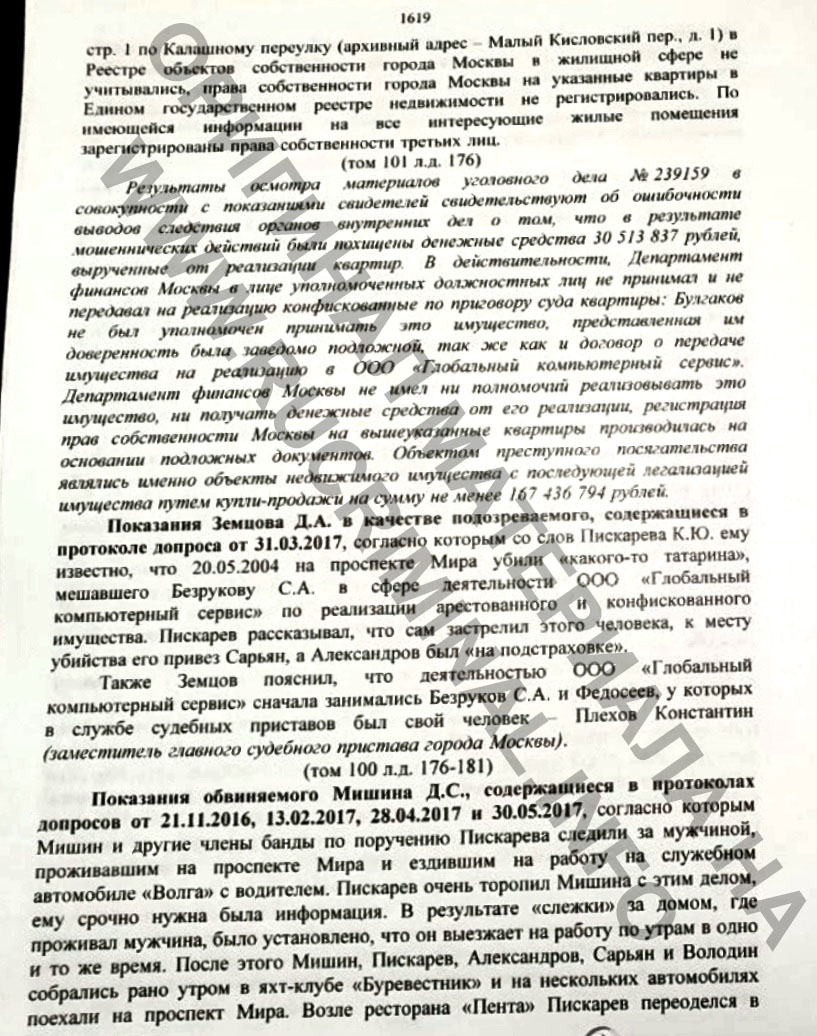
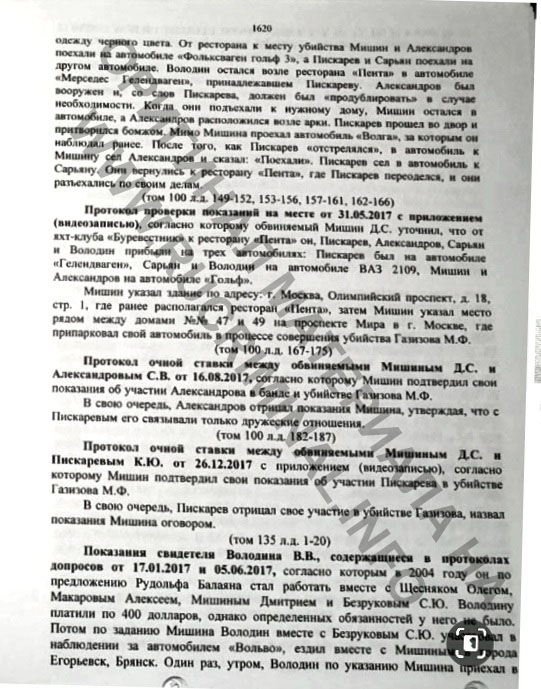
Testimony of D.A. Zemtsov as a suspect, according to which, according to K.Yu. he knows that on May 20, 2004, on Prospekt Mira, they killed "some Tatar" who was interfering with SA Bezrukov. in the field of activity of LLC "Global Computer Service" on the sale of seized and confiscated property. Piskarev said that he himself shot the man, Saryan brought him to the place of the murder, and Aleksandrov was "on the safe side." Zemtsov also explained that the activities of the "Global Computer Service" were first carried out by SA Bezrukov. and Fedoseev, who had their own man in the service of bailiffs (deputy chief bailiff of the city of Moscow, Konstantin Plekhov).


To be continued

Arseny Dronov