воскресенье, 3 марта 2024 г.

“The corruption money had to be parked somewhere”

The main witness in the Laundromat case, the largest laundering channel, has disappeared


The VChK-OGPU Telegram channel has learned the details of the mysterious disappearance of banker, ex-owner of the Portsmouth football club and regular witness in many high-profile cases, Vladimir Antonov. A story in the spirit of the coolest thrillers.

According to the interlocutor, Vladimir Antonov’s wife and son (this is his second family) live outside the Russian Federation, and he himself was alone in a large cottage on Rublyovka. At the beginning of December, Vladimir visited his parents and met with friends. And then, suddenly, it suddenly disappeared. When his complete silence lasted three days, a close relative went to his cottage. Everything indicated that Vladimir was inside, but no one opened the door. Then Vladimir’s father Alexander, also a former major banker who survived two assassination attempts, one of which was organized by Adam Delimkhanov, went to the place. He had the keys. There was no one inside the cottage, but everything indicated that Vladimir should be inside. His personal Mercedes was standing there; at the entrance there were keys, documents, a bag, and personal belongings.

The watchman of the cottage (the only one of the servants who lived on site permanently) said that on the day when Atonov supposedly disappeared, he arrived late in the evening in his Mercedes and soon the light came on in the office. Antonov could be seen there through the window; he had been working in his office for several hours. Then the watchman didn’t see the “chief”.
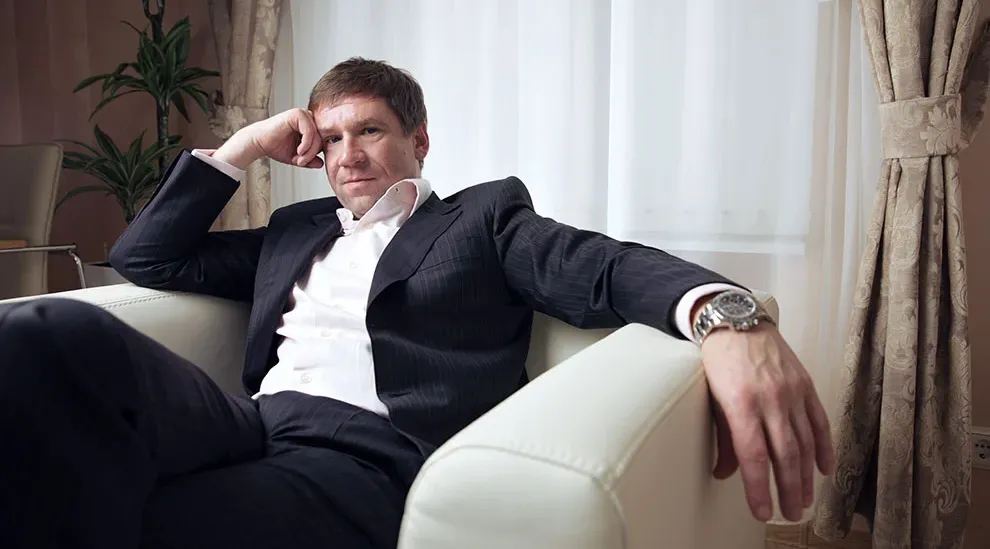


On the spot, there was a feeling that Vladimir was sitting in his office, minding his own business, and at one moment left the house (the watchman did not see this moment) and disappeared. No signs of a struggle or missing items. There is nothing suspicious on the cameras either. The banker's Mercedes was parked on the street, but for some reason it was not locked with a locking mechanism. The security at the checkpoint of the cottage village also did not note anything suspicious, and the camera in the village did not work in those days. Since then there has been no news of Vladimir. Vladimir’s father wrote a statement to the Odintsovo district police.

Vladimir Antonov was once a fairly successful banker (though always with a reputation as a participant in money laundering schemes), bought a bank in the Baltic states, the Portsmouth football club and the car company Spyker Cars N.V. in the UK. He even negotiated the purchase of the auto giant SAAB. However, then cases were opened against him in the European Union and he was forced to flee to the Russian Federation using a fake passport. In Russia, Antonov soon ended up in a pre-trial detention center on charges of embezzling funds from the Sovetsky Bank. However, I received a short sentence, and upon leaving I tried to buy different banks, but to no avail. However, Antonov did not refuse to participate in various financial transactions and in recent years has gone to great lengths.
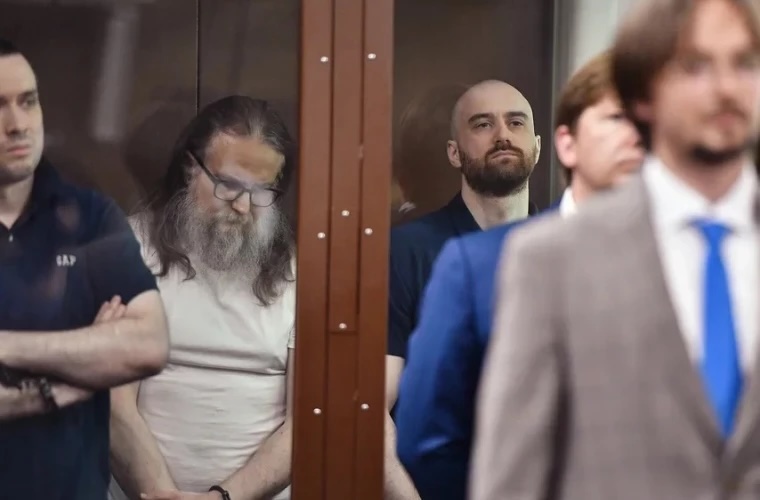


A Rucriminal.info source from among Vladimir Antonov’s close relatives told us: “I mentally said goodbye to him. I don’t believe I’ll ever see him.” Our interlocutor connects what happened with Vladimir with the detailed testimony that he and his father Alexander gave in the case of the largest money laundering channel - Laundromat. There were many names that have not yet been brought to justice, and details of the laundering of gigantic sums by officials, as well as the “roof” of the channel from the Central Bank of the Russian Federation and the FSB of the Russian Federation. Vladimir’s “disappearance” occurred at the moment when this testimony was put into action and work began against unknown participants (including those living outside the Russian Federation) / Rucriminal.info has at its disposal the testimony of Vladimir and Alexander Antonov, which we will publish in the coming days:

“Interrogation of witness Vladimir Aleksandrovich Antonov

To questions from the court:

What's your job?

I work as an adviser to the Fund for the Protection of the Rights of Investors of Foreign Organizations.

Do you know any of the defendants?

Korkin, Sobolev and Pakhomov know each other, the others do not. ...

Please tell us where, when and under what circumstances did you meet Sobolev?

Probably, first we need to talk about how this whole story began. Actually, the topic that this court is considering is called the “Moldavian scheme” or “Laundromat”. I have known about it since the mid-2000s and, in fact, this story was launched at one time by Vyacheslav Platon. This is a famous Moldovan banker-entrepreneur; at that time he owned the Moldinko bank. Accordingly, the scheme developed rather sluggishly until the end of the 2008 crisis due to the fact that payments through Moldovan banks were quite risky; there were banks that executed such payments much more efficiently: Baltic, Cypriot, Swiss, Luxembourg, etc. After 2008, compliance procedures in these countries were significantly tightened, and many banks began to refuse to service such payments en masse. Therefore, a story arose related to servicing such a cash flow through Moldova, where compliance was weak compared to the EU countries...

Accordingly, I met Plato in the mid-2000s after we acquired the Baltic banks and Moldincom Bank was a correspondent of these banks t’s not bad.” He described in sufficient detail all the working mechanisms, how the document flow works, who is responsible for what, who runs which areas for servicing the Laundromat. At the same time, he himself traveled to Russia quite often back then, and even lived here. He (Plato) was mainly engaged in client work related to attracting new banks and new clients into the circulation of this entire structure. Returning to the state prosecutor’s question about how I met Alexey Sobolev. In 2015, we began negotiations on the acquisition of the Sovetsky bank in the city of St. Petersburg and signed with the chairman of the board and the beneficial owner, as he declared himself, a certain framework agreement on the possibility of acquiring this bank. We began the standard procedure of assessing his financial condition. The financial condition of the bank was, to put it mildly, less than ideal. Well, several questions arose about those transactions, payments and re-registration of shares on rather unique Moldovan passports inside this whole dude. Dudil is not only an assessment of the financial condition, but a general assessment of both the legal condition of the bank and relationships with counterparties, that is, the whole...


In October 2015, a temporary administration was introduced into the bank, and later it was sanitized, that is, it became state-owned. Further, despite this, we continued to communicate with Mitrushin until his departure outside the Russian Federation, where Mitrushin said quite a lot that there is a great Sobolev who solves any issues and he is not afraid of the consequences of the reorganization of the Sovetsky Bank, since There is an agreement that financial and non-financial, that everything will be resolved, all questions to Mitrushin and his partners will be removed. In addition, we discovered in the Soviet Bank, I was even surprised, there was such a platform or platform “Liberty Reserve”, it was called, quite a noisy story. This is the first international online store selling a variety of illegal products, that is, such platforms now operate everywhere, and Liberty was such a pioneer. There is probably no need to explain what is sold there, everything that cannot be sold in ordinary life. Accordingly, this story was also serviced there for some time, after which these accounts were closed. To my question “Are you yourself?” Mitrushin’s answer was “We didn’t know what it was, Sobolev brought them.” Therefore, from which I concluded that Sobolev is quite, even I would say not a partner in the Sovetsky Bank, but its real beneficiary, and, accordingly, the same Vyacheslav Platon confirmed to me that he is doing all this in the interests of continuing the operation of the scheme on illegal transfer of funds outside the Russian Federation. We met several times after Sovetsky ceased to be a private bank and became a state bank. These meetings were sporadic, but, again, when we met, we understood that everything was still functioning, everything was working, and even Sobolev arranged for us, since I was not alone in this whole structure, a meeting with another St. Petersburg bank, which was called " Energomash". I don’t know its future fate today, but, as I understand it, at that time this bank was also being considered for someone to buy it and for it to become part of this structure for transferring money abroad. As far as I know, Sobolev served in addition to the fact that the legal part of this structure, namely the registration of enterprises, offshore companies, balance sheets to the tax office, he also acquired real estate and business assets in the interests of Plahotniuc and Platon both in Europe and in territory of the Russian Federation, in Moscow, in St. Petersburg. Mainly for commercial purposes for further rental. If we are talking about the same Soviet one, then in its capital there was a set of real estate with a defect in form, which as a result of the DIA was not received. The defect in the form looked very simple, that is, for example, this is a building according to a certificate that belongs to a bank, but there is no consent from the owner’s wife. Therefore, if anything happened in court, this situation could always be returned to its rightful owners. The same set of real estate represented a significant figure. According to the capital estimate, it amounted to 6 billion rubles. As a matter of fact, under such circumstances we met Mr. Sobolev. I can also tell you about Mr. Korkin.

To the questions of the state prosecutor:

You outlined the whole scheme, please tell me, did Plato even educate you on the intricacies of how the withdrawal of funds took place?

Plato is a very professional guy and knows this business in detail, and he started in the late 90s, so when he met with banks, and especially with bankers or bank employees, they understood perfectly well what it was. This was covered up by a report from a very good international law firm, Tentens. This report was always shown where it was concluded that this operation was not illegal, it was completely normal. However, there is paper, and there are essential things, and any person who owns a bank in the territory of this pageAna, Ukraine, it doesn’t matter, she understands perfectly well what it is. That is, we understand perfectly well that this transaction is not standard and it does not represent a real business. That is, this is a completely different type of transaction. I can explain in a few words. It looks like this. There are real business relationships between exporters and importers, and there are unreal ones. Their unreality lies in the fact that in order to bring products here as cheaply as possible, you need to pay “crookedly” in order to avoid paying customs duties in full and VAT at customs. This is done very simply. Instead of introducing expensive furniture, a board or some stools are placed in the container according to the papers. It goes to customs like stools, customs duty is paid on the stools and VAT is not paid in full. This is the first thing that is done. Secondly, this is ordinary corruption money, which cannot be stored anywhere except in well-known apartments; it must be parked somewhere. ...Therefore, they need to be sent abroad through a long chain, given the appearance of the activity of some company, which will eventually park them at the end in Switzerland, Luxembourg or somewhere else, and they arrive there already washed and bleached. There used to be a lot of ways to do this, that is, these are mountains of contracts stating that companies conduct real business activities, of course, they do not conduct any of it and die very quickly. For example, you pay for Samsung electronics for some reason to some offshore shop, although you can pay at Samsung. This is done in order to import a phone at a price of less than $500 and pay less to the treasury. And the second part is very important, this is laundering, what is called sending and parking money abroad, that is, unfortunately, this is such a problem. This scheme handled this perfectly.

Did Plato tell you how this scheme was supposed to work?

Yes, sure. He couldn’t help but tell me how it works because I was interested, I asked him myself. It works quite primitively. On the territory of Russia, in Russian banks and on the territory of Moldova, in Moldovan banks, mutual correspondent accounts are opened, which in banking language are called ..., that is, our account is with you and your account with us. Next, Russian banks open a set of Russian enterprises, and foreign banks open a set of foreign enterprises. And you have two ways to send money there. The first is the generation of fake or non-existent contracts for export-import operations, and the second is the execution of decisions of foreign courts in Russia. Previously, it all worked easily and calmly. Since in Moldova Mr. Plahotniuc controlled not only the Central Bank, but also the judicial system, such decisions were issued quite easily and quickly. Further, given that Moldova is a former Soviet republic, our judicial authorities should have applied such decisions and issued the corresponding writs of execution, since the court there made such a decision, we have an agreement with Moldova on this topic. After which this writ of execution is presented to the bank and the money is sent. Accordingly, the Russian bank sells currency to a Moldovan bank, and the Moldovan bank, in turn, makes a foreign currency payment to its correspondent account to some real import bank and where the mailing comes from, or transfers it to its correspondent account to a semi-real bank, and there, accordingly, to another Moldovan bank and from that Moldovan bank to the real one and then the mailing goes. This is done so that it is not visible how the money went, how the initial sender is connected to the final recipient. You can make any type of currency, you can keep a non-resident ruble in a correspondent account in a Moldovan bank. A non-resident ruble is a ruble that has already passed exchange control and is ready to be sent. It is quite primitive, nothing new can be added there. It grew so much because, in fact, there was the only cheap, fast and convenient sending channel. At the time when it reached its peak after 2011-2012, regulation did not allow normal banks to carry out such operations, since they risked having their license revoked. Therefore, if you look at the list of credit institutions that were in the chain, these are mostly credit institutions that have no value. Everyone understood perfectly well that such a bank would survive for some time, even more or less long, but not for long, and developing such a bank as a bank was absurd. Therefore, everyone knew perfectly well what was happening and how it was happening. But the level of commission that was then already available for these operations on the market made it possible to consider the economy as highly profitable, highly profitable. In 2005, this operation cost 0.1% of turnover, in 2011-2012 it could cost 10-11% of turnover. This is the difference due to the tightening of the settlement. Therefore, if in 2005 this was done by any Russian bank at the click of a button, then in 2011-2012 and beyond this became a serious problem especially for exporters/importers, and people who needed to Yes, what to do with money that is lying in an incorrect way.

What do you know about what percentage Plato offered for his services?

Here you cannot take a constant, it would not be fair, since there was a floating rate, which depended on the volume, type of currency, where you want to receive the money, at what speed you want to receive it, how much you are willing to leave on the balance. For example, I know that according to Grigoriev’s turnover at the Russian Land Bank, 30% of the turnover should have been in accounts, which is critically important for the bank’s liquidity, because if there is a hole in the bank, for example, liquidity has suffered or there is no capital, or it is negative, then this is critically important. As I understand it, Plato only met with wholesalers who did not supply to the end client. As I understand it, there was only one final client - the railway, and for wholesale comrades there is always a corresponding wholesale discount, as is usually the case. Therefore, I believe that the figure they received at the entrance was 3-4% at that time, now it would cost twice as much. Well, some are 5, some are 2.5, it depends on the agreements.

Please tell me which bank was involved in the Moldovan scheme on the territory of Moldova?

The Moldovan scheme involved 80% of the system. I don’t remember all the names of Moldovan banks, there are quite a few of them, but I know for sure that the first was Moldincom, then Victoria, one of the largest, then Uni, Universal, I don’t remember all the names. To be honest, we did not have a subsidiary bank in Moldova, so I don’t know the system that well, but the fact is that 80% of the banks were controlled by Plahotniuc.

Do you know anything about Moldinkom Bank?

Slava’s sister, Elena, was always in charge of the treasury in Moldinkom. Under it, in fact, there were all departments related to servicing operational activities and the treasury. Initially, when we met in Lithuania in the mid-2000s, in Latvia, the entire business of Moldincom, namely the operational part, was run by Elena Platon. She came to the Baltics more than once because they constantly maintained correspondent relations with us, since we had a large correspondent network and for us, to be honest, Moldincom was a small counterparty, but nevertheless a whole bank. Therefore, they interacted with Snoas and LKB quite actively. The only covenant that we have always set is zero payments from the Russian Federation, since we had a large bank in Russia and we did not want consequences from the regulator in relation to us, but they paid from Ukraine and from Kazakhstan.

On the territory of Ukraine, Plato had some kind of business, legal companies that accompanied this scheme?

Slava had a large office in Ukraine and a very “cheerful” relationship with the Ukrainian establishment. I understand that everyone understands what Ukraine is, there is no need to explain, and the fact that Ukraine has different legislation on such operations, but it is similar to Russian and there is also such a problem, but it is easier to solve because the regulator, law enforcement There are no organs in our understanding, so it seems to be prohibited, but allowed. The price is cheap, not the same as in Russia, but the volume is large because it’s easy to pay from Ukraine. I met Plato many times in Kyiv, since at least once a month I had a business trip to Kyiv. We met in Kyiv in our office. Almost all Ukrainian banks worked through Moldincom. Of course, I understand that Ukraine is not comparable to Russia in terms of volume of operations, but it was a significant market for him. Plus, he knew a lot of people from the Ukrainian establishment (he lists the names of people from the government). Slava had a good relationship with the National Bank, he did not have his own bank because there was no point, but Moldincom worked there in a representative manner at full capacity.

Did Plato tell you exactly which banks were directly involved in the Moldovan scheme on the territory of the Russian Federation?

Grigoriev had Zapadny, RZB, Tempbank, quite large. Kuzmin is the European Express, Regioninvest. There were about 60 of them. That’s why they wanted to include the Soviet bank in this story, since the bank was relatively large, 30 billion assets on the balance sheet, the correspondent network was not bad, and the volume of payments could be launched large, that is, it would not be so noticeable , like at some Intercapital bank, where there is nothing but a 10 million dollar balance sheet, including capital and one office in Moscow in the basement. In Ukraine the situation was different. One way or another, all decent normal banks worked there, including Raiffeisen, through this story. It’s just that everything is different there, there is a different regulator, different supervision, everything happens differently there.

Do you personally know Kuzmin and Grigoriev?

I know Grigoriev, but not Kuzmin. I met Grigoriev under the following circumstances. When my father and I had trouble with Lithuania in 2011, we had our first mistaken desire to buy a Russian bank. Accordingly, we began to look for a bank and were offered RZP as the object of the transaction. Grigoriev flew to me in London, where we talked withhim for a couple of days. He told me quite frankly what was happening with the bank’s condition and operations. Since I have been involved in this business all my adult life, it was clear that the bank was not a tenant, which is what I told Alexander, that taking into account the operating system he was running, this was the end. He said that everything was covered up according to the documents, there were all the relevant conclusions, that everything was clearly covered up from the point of view of law enforcement. Actually, it was Korkin who spoke then again. Everything is covered from the point of view of Moldova, so all requests that will be sent will be fought. To which I said that the problem is not what is there on the papers, don’t consider me an idiot. That's why we didn't go into this story. Then he offered to enter into the capital of Zapadny, but Zapadny Bank was a fairly large Russian bank, not included in the hundred, but definitely included in the second. And here, maybe we were ready for this project, but a virus had already been launched into it and it was already in such a volume that indicated that it was not viable.

What do you mean by virus?

The virus is Laundromat payments. The regulator sees all this quite clearly, and Rosfinmonitoring sees all this, so maybe for some time this may be possible, in agreement with some uncle Cherkalin, it will work, but anyway it will end sooner or later. Therefore, if you have already been admitted there, then it is not possible to get out.

And who did the initiative to buy Grigoriev’s bank come from?

From Grigoriev himself, since he bought Zapadny and was ready to sell RZB. But I think that maybe he would have sold it to someone if he had run into people who were less knowledgeable than we are. And since he no longer had time to do this, since the Central Bank revoked the license precisely for this, and then the hole became visible, etc., then in general, Western was also coming to an end.

You don’t know Kuzmin personally, but at the same time, do you know that Kuzmin’s bank also worked?

Certainly. The fact is that Grigoriev, when he bought Zapadny, he tried to stop these operations, get into the banking business, and somehow his dialogue with Plahotniuc did not work out, he told me this himself. He even flew to communicate with him several times. And as far as I understand, the European Express has become a replacement for the main correspondent. Then the Baltic states appeared. And at some stage, European Express allowed these payments without considering that there was anything bad in it, or pretending that there was nothing wrong with it. In general, any professional person who has worked in a bank for at least 5 years understands well what it is, that is, it is not some kind of secret. You can make any documents that this is all good, but it’s still visible.

Who selected clients to withdraw funds from the Russian Federation?

It wasn't a matter of who picked them, they didn't need to be picked, there were so many of them that they were looking for an opportunity. And then they just needed to reach the right counterparty. The most basic part of the earnings goes to those who are at the front, who work with the clientele, who set the tariffs. As far as I know, Slava Platon personally did this, Korkin, and whoever didn’t do it because it was flowing, Vlasov. If we look at the list of banks, there are a lot of them. And here the question is that you must also agree with the bank with which you are working because the bank is not stupid and understands how everything is divided. Plus those banks that were in the chain, they also had their own clients who also went to the stream, and they had to coordinate this with the counterparties here, with Plato or with Corkin, since Corkin was actually a representative of Plahotniuc, and Platon was Plahotniuc’s partner . It is not known who is older or younger. At that time there was no channel, in fact, this was the only channel. It was multifaceted, there were many banks, but there was only one final gateway. Then we only had to say what we could.

Did Platon introduce you personally to Korkin? do you know each other?

We knew each other very poorly, at various events. Chuvilina interacted with him at some events and parties. Well, to be honest, the banking world is quite small and everyone knows each other. After all, we were a large organization, one of the largest banking groups, so, of course, we were constantly present at some events. But from a lot of my acquaintances and comrades I heard information that this is a serious person who represents the interests of the “Moldovan dad” and, accordingly, resolves any issues, since he has good connections in the states here. The names of people were called, as you know in the book, who are not named out loud.

Tell me, please, was Korkin introduced to you by his last name or first name?

I saw two documents. I saw a document addressed to Korkin, because our security service was cheerful, and Kuznetsov. Why this was done then is because when a person is engaged in this type of business, sometimes when you come somewhere, it is better to say that you were not there.

Returning to Sobolev and Pakhomov, regarding the role in the “Moldavian scheme”, can you tell us specifically about Sobolev in the “Moldavian scheme”?

Well, essentially, this is a person whoth was an equal partner of Plato and Plahotniuc, as a result, on the territory of the Russian Federation. That is, this is a person who had a certain resource in our law enforcement system, a person who had knowledge and a large legal company, Primedwise, who could acquire the necessary assets, select the right people, and put management on these assets. This was a serious partner, and not just a third-party organization that was hired for one or two transactions.”

Timofey Grishin

To be continued

Source: www.rucriminal.info

«Коррупционные деньги надо было куда-то парковать»

Исчез главный свидетель по делу «Ландромата»- крупнейшего отмывочного канала


Телеграм-каналу ВЧК-ОГПУ стали известны подробности загадочного исчезновения банкира, экс-владельца футбольного клуба «Портсмут» и штатного свидетеля по множеству резонансных дел Владимира Антонова. История в духе самых крутых триллеров.

По словам собеседника, жена и сын Владимира Антонова (это его вторая семья) проживают за пределами РФ, а сам он один пребывал в большом коттедже на Рублевке. В начале декабря Владимир заехал к родителям, встречался с друзьями. А потом, вдруг, резко пропал. Когда его полное молчание продолжалось три дня, к нему в коттедж поехала близкая родственница. Все указывало на то, что Владимир внутри, но дверь никто не открывал. Тогда на место отправился отец Владимира Александр – тоже в прошлом крупный банкир, переживший два покушения, одно из которых организовал Адам Делимханов. У него были ключи. Внутри коттеджа никого не было, при этом все указывало, что Владимир должен быть внутри. На месте стоял его личный Мерседес, при входе лежали ключи, документы, сумка, личные вещи.

Сторож коттеджа (единственный, кто из прислуги проживал на месте постоянно) рассказал, в день, когда предположительно пропал Атонов, тот приехал поздно вечером на своем Мерседес и вскоре зажегся свет в кабинете. Там видно было Антонова через окно, он работал в кабинете несколько часов. Потом сторож «шефа» не видел.


На месте сложилось ощущение, что Владимир сидел в кабинете, занимался своими делами, а в один момент вышел из дома (сторож не видел этот момент) и пропал. Никаких следов борьбы или пропавших вещей. На камерах тоже ничего подозрительного. «Мерседес» банкира стоял на улице, но был почему-то не закрыт на запирающий механизм. Охрана на КПП коттеджного поселка также ничего подозрительного не отметила, а камера в посёлке не работала в те дни. С тех пор о Владимире не было никаких вестей. Отец Владимира написал заявление в полицию Одинцовского района.

Владимир Антонов был когда-то довольно успешным банкиром (правда, всегда с репутацией участника схем по отмыванию денег), купил банк в Прибалтике, футбольный клуб Portsmouth и автокомпанию Spyker Cars N. V. В Великобритании. Даже вел переговоры о покупке автогиганта SAAB, Однако, потом в Евросоюзе на него были возбуждены дела и он вынужден был по поддельному паспорту сбежать в РФ. В России Антонов вскоре угодил в СИЗО по обвинению в хищении средств банка «Советский». Однако, получил небольшой срок, по выходу пытался купить разные банки, но безуспешно. Впрочем, от участия в различных финансовых операциях Антонов не отказался и пустился в последние годы «во все тяжкие».


Источник Rucriminal.info из числа близких родственников Владимира Антонова рассказал нам: «Я мысленно попрощался с ним. Не верю, что когда-либо его увижу». Наш собеседник связывает произошедшее с Владимиром, с детальными показаниями, которые он и его отец Александр дали по делу о крупнейшем канале по отмыванию денег – «Ландромате». Там было множеств фамилий, которые пока не привлечены к ответственности, и деталей отмывания чиновниками гигантских сумму, а также «крыши» канала из ЦБ РФ и ФСБ РФ. «Исчезновение» Владимира произошло в момент, когда этим показания дали ход и началась работа в отношении неизвестных участников (в том числе проживающих за пределами РФ)/ В распоряжении Rucriminal.infoоказались показания Владимира и Александра Антоновых, которые мы будем публиковать ближайшие дни:

«Допрос свидетеля Антонова Владимир Александрович

На вопросы суда:

Где работаете?

Работаю в фонде защиты прав инвесторов иностранных организаций советником.

Кто-то из подсудимых Вам знаком?

Коркин, Соболев и Пахомов знакомы, остальные нет. …

Расскажите, пожалуйста, где, когда и при каких обстоятельствах познакомились с Соболевым?

Наверно, для начала надо рассказать о том, как начиналась вся эта история. Собственно, тема, которая рассматривая данным судом называется «Молдавская схема» или «Ландромат». Мне известно с середины 2000-х годом и, собственно, эту историю запустил в свое время Вячеслав Платон. Это известный молдавский банкир-предприниматель, в том время он владел «Молдинком» банком. Соответственно, схема развивалась достаточно вяло до конца кризиса 2008 года в связи с тем, что платежи через молдавские банки были достаточно рискованными, были банки, которые исполняли такие платежи гораздо более эффективно: прибалтийские, кипрские, швейцарские, люксембургские и тд. После 2008 года комплайенс процедура в этих странах были существенно ужесточены, и многие банки стали отказываться от обслуживания таких платежей в массовом порядке. Поэтому возникла история, связанная с тем, чтобы обслуживать такой денежный поток через Молдавию, в которой комплайенс был слабый по сравнению со странами Евросоюза…

Соответственно, с Платоном я познакомился в середине 2000-х годов после того, как мы приобрели прибалтийские банки и «Молдинком» банк являлся корреспондентом этих банков. Собственно говоря, причиной знакомства, как раз, и было то, что природа платежей, которая шла из РФ, мягко говоря, была вне тех комплайенс процедур, которые введены внутри. Соответственно, у нас установился не плохой человеческий контакт, он достаточно профессиональный человек, интересный, и мы договорились о том, что корреспондентские отношения продолжатся, платежи со стороны российских банков прекратятся через наши западные кредитные учреждения. В то время мы владели с семьей достаточно крупной финансовой группой, которая работала в десятках стран, и, соответственно, была достаточно известной по рынку, поэтому многие работали с банками-корреспондентами и это было выделено в отдельный вид бизнеса. Мы продолжили общение с Вячеславом, поскольку у него были достаточно обширные интересы в Украине, у нас в Украине было два банка, которые работали до конца жизнедеятельности группы достаточно успешно и тоже поддерживали корреспондентские отношения с Молдинком. О том, что схема начала расти и разрастаться я узнал от него на встрече в начале 2012 года в Лондоне, так как оказался там после экспроприации, как они говорят национализации нашего основного банка в Литовской республике. Мы до сих пор в международных судах. На этой встрече Вячеслав достаточно подробно, приглашая нас в этот бизнес, описал суть того, что они делают и с кем они делают. От него я узнал о том, что человеком, который прикрывает по всем фронтам эту историю в Молдавии, является господин Плахотнюк Владислав. С ним я в 2010 году сам разговаривал по телефону на тему открытия молдавских банков в наших иностранных банках и исполнения долларовых платежей. Но, поскольку мы сильно дорожили долларовыми счетами, он не услышал согласия с нашей стороны, поскольку это привело бы к закрытию таких счетов, а наличие у банка таких счетов в то время являлось очень важным для его дальнейшей жизнедеятельности. Вячеслав достаточно подробно рассказал мне о том, как устроена конструкция, о том, что с Плахотнюком они фактически контролируют 80% финансового рынка Молдавии, что, если честно, вызвало у меня бурный восторг потому, что исполнить контроль над финансовой системой в таком объеме, даже небольшой, но целой страны это круто. Соответственно, они, по сути, чувствовали себя абсолютными хозяевами финансового сектора. Под контролем находился ЦБ, орган по надзору за страховыми компаниями, то есть это действительно был такой, можно сказать, монстр. Если Вы помните, когда навернулась сама схема и бурно освещалось это все в прессе, в том числе в иностранной, оказалось, что в молдавских банках была обнаружена недостача капитала более миллиарда евро, а для Молдавии, для ее фин. сектора это катастрофическая цифра. Там рекапитализация была в результате произведена и тд. Ну и мне было интересно узнать как работает эта вся история. Платон пришел на эту встречу вместе с Германом Валерьевичем Горбунцовым, который в том время еще владел небольшим молдавским банком, по-моему, он назывался «Универсал». Вячеслав, поскольку мы были очень давно знакомы, достаточно подробно рассказал о том, как схема функционирует в Молдавии, кто занимается ее обслуживанием с точки зрения взаимодействия с нац.банком, правоохранительными органами, ну и с улыбкой сообщил о том, что хозяин страны этим и занят. И рассказал как она функционирует в РФ, какие банки уже вовлечены в этот процесс. На мой вопрос «А как же Вы решаете вопросы с регулятором, с правоохранительными органами, так как 2012-2013 и далее это, все-таки, года, когда нельзя было работать, как в начале и середине 2000-х, все было довольно зарегулировано, регламентировано и надзиралось надлежащим образом. Если Вы помните, госпожа Набиулина возглавила ЦБ в 2012 году. И до нее процедуры были достаточно жесткими. На что я услышал от него, что выстроена целая система взаимоотношений с ЦБ и правоохранительными органами, в частности господин Коркин был человеком, который занимается решением своеобразных вопросов и он же является партнером на территории России господина Плахотнюка. При этом, на сколько я понимаю, согласовывались все лимиты, количество платежей заранее, все это проходило согласование со стороны регулятора и тех органов, которые призваны контролировать регулятора. Все работало достаточно четко. Им же была выставлена система регистрации соответствующих предприятий, на нашем жаргоне они называются «помойки», то есть это компании, которые не ведут реальной хозяйственной деятельности. Как правило, директор не знает о том, что он директор, либо знает о том, что он директор, но не понимает что он возглавляет. Фактически, это компании, через которые проводят существенные объемы денег, и потом они ликвидируются, либо бросаются. Господин Пахомов возглавлял у него такое подразделение внутри РФ. Мы даже посмеялись с Вячеславом потому, что понятно было тогда, что мне придется возвращаться домой из Англии, что с Литвой мы не договоримся, а я не плохо в шахматы играю, а он мне и говорит «вот встретишься с Пахомовым, как раз он тоже в шахматы играет неплохо». Он достаточно подробно описал все механизмы работы, как устроен документооборот, кто за что отвечает, кто какие ведет зоны по обслуживанию «ландромат». При этом сам он в Россию тогда достаточно часто ездил, здесь даже проживал. Он (Платон) в основном занимался клиентской работой, связанной с привлечением новых банков и новых клиентов в оборот всей этой конструкции. Возвращаясь к вопросу государственного обвинителя о том, как я познакомился с Соболевым Алексеем. В 2015 году мы начали переговоры о приобретении банка «Советский» в городе Санкт-Петербурге и подписали с председателем совета и бенефициарным владельцем, как он сам себя декларировал, некое рамочное соглашение о возможности приобретения этого банка. Мы начали стандартную процедуру оценки его финансового состояния. Финансовое состояние банка отличалось, мягко говоря, от идеального. Ну и возникло несколько вопросов к тем транзакциям, платежам и переоформлению акций на достаточно своеобразные молдавские паспорта внутри этого всего дьюдила. Дьюдил – это не только оценка финансового состояния, а общая оценка и юридического состояния банка, и взаимоотношения с контрагентами, то есть всецелая…


В октябре 2015 года в банк была введена временная администрация, а позднее он был санирован, то есть стал государственным. Дальше, не смотря на это, мы продолжили общение с Митрушиным вплоть до его отъезда за пределы РФ, где достаточно много Митрушин говорил о том, что есть великий Соболев, которые решает любые вопросы и он не опасается последствий санации банка «Советский», так как есть договорённость о том, что финансовые и не финансовые, что все будет решено, все вопросы к Митрушину и его партнерам будут сняты. Кроме того, мы обнаружили еще в Советском банке, меня даже удивило, была такая платформа или площадка «Либерти Резерв» она называлась, достаточно шумная история. Это первый международный интернет-магазин по торговле нелегальной продукцией разнообразной, то есть такие площадки сейчас функционируют везде, а Либерти это был такой пионер. Наверно, не надо объяснять что там продается, все что нельзя продавать в обычной жизни. Соответственно, эта история тоже там обслуживалась какое-то время, после чего эти счета были закрыты. На мой вопрос «А Вы в себе?» ответ Митрушина был «Мы не знали что это такое, их привел Соболев». Поэтому из чего я сделал вывод, что Соболев является достаточно, даже я бы сказал не партнером в банке «Советский», а его бенефициаром реальным, а, соответственно, тот же Вячеслав Платон мне и подтвердил, что делает это все в интересах продолжения работы схемы по незаконному переводу денежных средств за переделы РФ. Несколько раз мы встречались уже после того, как «Советский» перестал быть частным банком и стал государственным. Эти встречи носили эпизодический характер, но, опять же, встречаясь мы понимали, что по-прежнему все функционирует, все работает, и даже Соболев устроил нам, поскольку я был не один во всей этой конструкции, встречу с другим питерским банком, который назывался «Энергомаш». Я не знаю его дальнейшую судьбу на сегодняшний день, но, я так понимаю, что на тот момент этот банк тоже рассматривался на то, чтобы его кто-то купил и, чтобы он встал в эту конструкцию по переводу денег за рубеж. На сколько мне известно, Соболев обслуживал помимо того, что юридическую часть этой конструкции, а именно регистрацию предприятий, оффшорных компаний, балансы в налоговую инспекцию, он также приобретал в интересах Плахотнюка и Платона недвижимость и бизнес-активы как на территории Европы, так и на территории РФ, в Москве, в Санкт-Петербурге. В основном коммерческого назначения для дальнейшей их сдачи в аренду. Если мы говорим о том же Советском, то в его капитале с дефектом формы стоял набор недвижимости, который в результате АСВ не досталось. Дефект формы выглядел очень просто, то есть это, например, здание по свидетельству принадлежащее банку, а согласия жены собственника нет. Поэтому в случае чего по суду эту ситуацию можно было всегда вернуть как бы законным владельцам. Тот же набор недвижимости представлял из себя существенную цифру. По оценке в капитале она составляла 6 миллиардов рублей. Собственно говоря, при таких обстоятельствах мы познакомились с господином Соболевым. Про господина Коркина могу тоже рассказать.

На вопросы государственного обвинителя:

Вы в общих чертах обрисовали всю схему, скажите, пожалуйста, Платон вообще Вас посвящал в тонкости каким образом происходил вывод денежных средств?

Платон очень профессиональный парень и знает этот бизнес в деталях, и начинал он в конце 90-х, поэтому когда он встречался с банками, а особенно с банкирами или банковскими служащими, они прекрасно понимали что это. Это было прикрыто отчетом очень хорошей международной юридической компании «Тентенс». Этот отчет показывался всегда, где был сделан вывод о том, что данная операция не носит незаконный характер, она вполне нормальная. Однако есть бумага, а есть сутевые вещи, и любой человек, владеющий банком на территории этой страны, Украины, неважно, прекрасно понимает что это. То есть мы прекрасно понимаем, что эта транзакция не стандартная и она не несет в себе реальный бизнес. То есть это совершенно другого вида транзакция. Я могу пояснить в двух словах. Это выглядит следующим образом. Есть реальные бизнес взаимоотношения между экспортерами и импортерами, и есть нереальные. Их нереальность заключается в том, что для того, чтобы максимально дешево ввести сюда продукцию нужно заплатить «криво» для того, чтобы на таможне не уплатить таможенные сборы в полном объеме и НДС. Делается это очень просто. Вместо того, чтобы ввести мебель дорогущую, в контейнер кладется по бумагам доска или какие-нибудь табуретки. На таможню это заезжает как табуретки, уплачивается таможенный сбор с табуреток и не уплачивается НДС в полном объеме. Это первое что делается. Второе – это обычные коррупционные деньги, которые невозможно сложить нигде кроме как по известным квартирам, их надо куда-то парковать. …Поэтому их надо отправить за границу через длинную цепочку, придать видимость деятельности какой-то компании, которая будет их в итоге парковать в конце в Швейцарии, Люксембурге или где-либо еще, и туда они попадают уже отмытые и отбеленные. Существовала раньше масса способов это сделать, то есть это горы контрактов о том, что компании ведут реальную хозяйственную деятельность, конечно, они никакую ее не ведут и очень быстро умирают. Например, вы платите за электронику «Самсунг» почему-то какой-то оффшорной лавке, хотя вы можете заплатить на «Самсунг». Это делается для того, чтобы ввезти телефон по цене не 500 долларов и платить поменьше казне. И вторая часть очень важная, это отмывка, то что называется отправка и парковка за границей денег, то есть это, к сожалению, есть такая беда. Эта схема отлично с этим справлялась.

Платон рассказывал каким образом эта схема должна была действовать?

Да, конечно. Он не мог мне не рассказать каким образом она работает потому, что мне было интересно, я его сам спрашивал. Работает она достаточно примитивно. На территории России в российских банках и на территории Молдавии в молдавских банках открывают взаимные корр.счета, которые на банковском языке называются …, то есть наш счет у вас и ваш счет у нас. Дальше в российских банках открывается набор российских предприятий, в иностранных банках набор иностранных предприятий. И у вас существует два способа отправки денег туда. Первый – это генерация поддельный или несуществующих контрактов по экспортно-импортным операциям, а второй – это исполнение решений иностранных судов на территории России. Раньше это все работало легко и спокойно. Поскольку в Молдавии господин Плахотнюк контролировал не только ЦБ, но и судебную систему такие решения выписывались достаточно легко и быстро. Далее, учитывая, что Молдавия является бывшей Советской республикой, наши судебные органы должны были такие решения применять и выдавать соответствующие исполнительные листы, так как там суд принял такое решение, у нас есть соглашение с Молдавией на эту тему. После чего этот исполнительный лист предъявляется в банк и идет отправка денег. Соответственно, российский банк продает валюту молдавскому банку, а молдавский банк в свою очередь исполняет валютный платеж на свой корр.счет уже в настоящий какой-то банк импортный и откуда идет рассылка, либо переставляет на свой корр.счет в полунастоящий банк, а там, соответственно, на другой молдавский банк и с того молдавского банка уже на настоящий и потом идет рассылка. Делается это для того, чтобы было не видно как ушли деньги, как связан начальный отправитель с конечным получателем. Можно делать любой вид валюты, можно нерезедентный рубль держать на корр.счете в молдавском банке. Нерезедентный рубль – это рубль, который уже прошел валютный контроль и готов к отправке. Она достаточно примитивная, там ничего нового приделать нельзя. Разрослась она так потому, что, по сути, был единственный дешевый быстрый и удобный канал отправки. В то время, когда она вышла на пиковые обороты после 2011-2012 годов, уже регулирование не позволяло нормальным банкам делать такие операции, поскольку они рисковали отзывом лицензии. Поэтому, если Вы посмотрите на список кредитных организаций, которые стояли в цепочке, то это в основном кредитные организации не имеющие стоимости. Все прекрасно понимали, что такой банк проживет какое-то время, пусть даже более менее длительное, но не долгое, и развивать такой банк как банк, это абсурд. Поэтому все прекрасно знали что происходит и как происходит. Но уровень комиссии, который тогда уже был по этим операциям на рынке позволял считать экономику как высоко рентабельную, высоко прибыльную. В 2005 году эта операция стоила 0,1% от оборота, в 2011-2012 году она могла стоить 10-11% от оборота. Вот такая разница в связи с ужесточением урегулирования. Поэтому, если в 2005 году это исполнял любой российский банк по щелчку, то в 2011-2012 и далее это стало серьезной проблемой особенно для экспортеров/импортеров, и людей, которым нужно было куда-то деть деньги, которые лежат некорректным образом.

Что Вам известно о том, какой процент предлагал Платон за свои услуги?

Здесь нельзя взять константу, это будет не справедливо, так как там была плавающая ставка, которая зависела от объема, вида валюты, куда вы хотите получить деньги, с какой скоростью вы их хотите получить, сколько вы готовы оставить на остатке. Я, например, знаю, что по оборотам у Григорьева в «Русском земельном банке» 30% от оборота должно было лежать на счетах, что критично важно для ликвидности банка, потому что, если в банке дырка, например, ликвидность пострадала или капитала нет, или он отрицательный, то это критично важно. Я так понимаю, что Платон встречался только с оптовыми товарищами, которые поставляли не конечному клиенту. Как я понимаю, конечный клиент был только один – это железная дорога, а для оптовых товарищей всегда соответствующая оптовая скидка, как это обычно происходит. Поэтому, я полагаю, что цифра, которую получали они на входе – это 3-4% в то время, сейчас бы это стоило дороже в два раза. Ну, кто-то 5, кто-то 2,5, тут зависит от договоренностей.

Скажите, пожалуйста, в молдавской схеме на территории Молдавии какой банк был задействован?

В молдавской схеме было задействовано 80% системы. Я не помню все названия молдавских банков, их не мало, но я точно знаю, что первым был «Молдинком», потом «Виктория» один из крупнейших, потом «Уни», «Юниверсал», я не помню все названия. Если честно, у нас не было дочернего банка в Молдавии, поэтому я не так хорошо знаю систему, но то, что 80% банков контролировал Плахотнюк.

Вам известно что-то о «Молдинком» банке?

Казной в Молдинком всегда занималась сестра Славы – Елена. Под ней, по сути, находились все департаменты, связанные с обслуживанием операционной деятельности и казначейство. Изначально, когда мы в Литве встречались в середине 2000-х, в Латвии, весь бизнес Молдинкома, именно операционную часть, вела Елена Платон. Она приезжала неоднократно в Прибалтику потому, что они поддерживали с нами корреспондентские отношения постоянно, так как у нас корр.сеть была большая и для нас, если честно, Молдинком был небольшим контрагентом, но тем не менее целый банк. Поэтому они взаимодействовали со Сноасом и ЛКБ довольно активно. Единственная ковенанта, которую мы ставили всегда – это ноль платежей из РФ, так как у нас в России был большой банк и мы не хотели последствий со стороны регулятора по отношению к нам, а с Украины они платили и с Казахстана.

На территории Украины у Платона находился какой-то бизнес, юридические компании, которые сопровождали эту схему?

У Славы в Украине был большой офис и очень «веселые» взаимоотношения с украинским эстэблтшментом. Я понимаю, что все понимают что такое Украина, не нужно объяснять, и то, что в Украине другое законодательство по таким операциям, но оно похоже на Российское и там тоже существует такая проблема, но она проще решается потому, что более бардачный регулятор, правоохранительных органов в нашем понимании нет, поэтому вроде как запрещено, но разрешено. Цена дешевая, не такая как в России, но большой объем потому, что из Украины просто заплатить проблема. Я с Платоном очень много раз встречался именно в Киеве, так как как минимум один раз в месяц у меня была командировка в Киев. Мы встречались в Киеве у нас в офисе. Почти все Украинские банки работали через Молдинком. Я, конечно, понимаю, что по объему операций Украина не сопоставима с Россией, но это был для него значительный рынок. Плюс он знал очень много людей из Украинского эстэблишмента (перечисляет фамилии людей из правительства). У Славы были хорошие отношения с Нацбанком, у него не было своего банка поскольку не было смысла, но представительно Молдинком работало там в полный рост.

Вам Платон рассказывал какие именно банки были непосредственно задействованы в молдавской схеме на территории РФ?

У Григорьева был Западный, РЗБ, Темпбанк, достаточно крупный. Кузьмин – это Европейский экспресс, Регионинвест. Их было штук 60. Поэтому и хотели Советский сложить в эту историю, так как банк был относительно крупный, 30 миллиардов активы по балансу, была корр.сеть не плохая, и объем платежей можно было запустить большой, то есть это было бы не так заметно, как на каком-то там банке Интеркапитал, где нет ничего кроме 10 миллионов долларов баланса, включая капитал и одного офиса в Москве в подвале. В Украине была другая ситуация. Там так или иначе все работали приличные нормальные банки, в том числе Райфайзен, через эту историю. Просто там все по-другому, там другой регулятор, другой надзор, там не так все происходит.

Вы лично с Кузьминым и Григорьевым знакомы?

С Григорьевым я знаком, с Кузьминым нет. С Григорьевым я познакомился при следующих обстоятельствах. Когда у нас с отцом беда случилась с Литвой в 2011 году, у нас возникло первое ошибочное желание купить Российский банк. Соответственно, мы начали подыскивать банк и нам было предложен РЗП в качестве объекта сделки. Григорьев прилетал ко мне в Лондон, где мы общались с ним пару дней. Он достаточно откровенно рассказал мне что там происходит с состоянием банка и операциями. Поскольку я всю сознательную жизнь занимаюсь этим бизнесом, было понятно, что банк не жилец, что я и сказал Александру, что с учетом операционки, которую он вел – это конец. Он сказал, что все прикрыто по документам, есть все соответствующие заключения, что все четко прикрыто с точки зрения правоохраны. Собственно, опять же тогда прозвучал Коркин. Все прикрыто с точки зрения Молдавии, поэтому все запросы, которые будут отправляться, будут биться. На что я сказал, что проблема не в том, что там по бумагам, не надо меня считать за идиота. Поэтому мы не пошли в эту историю. Тогда он предложил войти в капитал Западного, но банк Западный был достаточно крупный Российский банк, в сотню не входил, но во вторую точно входил. И здесь может мы и готовы были на этот проект, но в него уже запустили вирус и он уже был в таком объеме, который говорил о том, что он не жизнеспособен.

Что Вы подразумеваете под словом вирус?

Вирус – это платежи по ландромату. Регулятор достаточно четко все это видит, и Росфинмониторинг все это видит, поэтому может какое-то время это может быть и можно по согласованию с каким-то дяденькой Черкалиным, то будет работать, но все равно это рано или поздно закончится. Поэтому, если вы уже допустили туда, то это не выйти.

А инициатива по поводу того, чтобы купить банк Григорьева от кого исходила?

От самого Григорьева, поскольку он купил Западный и был готов продавать РЗБ. Но я думаю, что он может быть его бы и продал кому-нибудь, если бы нарвался на людей, которые меньше, чем мы разбираются. А поскольку он уже не успел это сделать, так как ЦБ отозвал лицензию именно за это, а потом уже стало видно дырку и тд, то в общем у Западного тоже шла к концу.

Вы с Кузьминым лично не знакомы, но вместе с тем Вам известно, что банк Кузьмина тоже работал?

Конечно. Дело в том, что Григорьев, когда купил Западный, он пытался взять и прекратить эти операции, заняться банковским бизнесом и как-то у него не задался диалог с Плахотнюком, он мне сам это рассказывал. Он даже летал неоднократно с ним общаться. И на сколько я понял, Европейский экспресс стал заменой основного корреспондента. Потом уже появилась Прибалтика. А на каком-то этапе Европейский экспресс пустил эти платежи не считая, что в этом есть что-то плохое, либо делая вид, что не считая. Вообще любой профессиональный человек, который хотя бы 5 лет в банке проработал, хорошо понимает что это такое, то есть это не есть какая-то тайна. Можно любых документов наделать, что это все хорошо, но все же видно.

Кто подбирал клиентов, чтобы вывести денежные средства из РФ?

Дело было не в том кто их подбирал, их не надо было подбирать, их было так много, что они искали возможность. А дальше просто нужно было им дойти до правильного контрагента. Самая основная часть заработка у тех, кто на фронте, кто работает с клиентурой, кто ставит тарифы. На сколько мне известно, этим занимался Слава Платон лично, Коркин, да кто только не занимался потому, что поток, Власов. Если мы посмотрим список банков, то их море. И здесь же вопрос еще в том, что с тем банком, с которым вы работаете, вы тоже должны согласовать потому, что в банке не дураки и понимают как это все делится. Плюс те банки, которые стояли в цепочке, у них тоже были свои клиенты, которые тоже шли на поток, и они должны были это согласовывать с контрагентами здесь, с Платоном или с Коркиным, поскольку Коркин фактически являлся представителем Плахотнюка, а Платон был партнером Плахотнюка. Не известно кто еще старше или младше. В то время нет ни одного канала, по сути, это был единственный канал. Он был многогранный, много банков, но последний шлюз один. Тогда нужно было сказать только то, что мы можем.

Вас лично Платон Коркину представлял? Вы знакомы?

Мы знакомы были очень плохо, на мероприятиях разнообразных. С ним взаимодействовала Чувилина, на каких-то мероприятиях, тусовках. Ну и, если честно, то банковский мир довольно тесен и все друг друга знают. Мы же все-таки были крупной организацией, одной из самых крупных банковских групп, поэтому, конечно, постоянно присутствовали на каких-то мероприятиях. Но от массы своих знакомых и товарищей я слышал информацию о том, что это серьезный человек, который представляет интересы «молдавского папы» и, соответственно, решает любые вопросы, так как хорошие связи в штатах, здесь. Назывались фамилии людей, как знаете в книжке, кого в слух не называют.

Скажите, пожалуйста, Вам Коркина представляли по фамилии или по имени?

Я видел два документа. Я видел документ на имя Коркина, потому что служба безопасности у нас веселая была, и Кузнецова. Почему это делалось тогда, потому, что когда человек занимается таким видом бизнеса, то иногда, когда ты куда-то приходишь, то лучше сказать, что ты там не был.

Возвращаясь к Соболеву и Пахомову, относительно роли в «молдавской схеме», можете рассказать именно про Соболева в «молдавской схеме»?

Ну, по сути, это человек, который был равноправным партнером Платона и Плахотнюка, как следствие, на территории РФ. То есть это человек, который обладал определенным ресурсом в нашей правоохранительной системе, человек, который обладал знаниями и большой юридической компанией «Праймэдвайз», который мог приобрести нужные активы, подобрать нужных людей, поставить управление на этих активах. Это был серьезный такой партнер, а не просто сторонняя организация, которую наняли на одну-две транзакции».

Тимофей Гришин

Продолжение следует

Источник: www.rucriminal.info

пятница, 1 марта 2024 г.

“I was the first to “close” Navalny when he returned”

Judicial and prosecutorial gift to the son of Olga Golodets’ friend


“Navalny will be buried tomorrow

It's good that I have a trial tomorrow in the area

Police officers have been strengthened for three days

I am receiving unpleasant messages. I was the first to close it when he returned. And then they added everything up"

The VChK-OGPU telegram channel obtained a recording of an informal speech made on February 29 by prosecutor Ekaterina Tikhonova, who was the state prosecutor during the trial against Alexei Navalny in the criminal case of “slander of a veteran,” as well as during the process of changing the preventive measure in the case “ Yves Rocher."


The recording was made on the sidelines of the hearing on the case of the director of the directorate of the FSBI REA of the Ministry of Energy of Russia Roman Shcherbov for mediation in the transfer of bribes to the general director of the FSBI REA of the Ministry of Energy of Russia Anatoly Tikhonov, and subsequently deputy. Minister of Energy of the Russian Federation.

In the next recording, Tikhonova instructs Shcherbov on how to speak, what to say and what to do so that he does not receive a real sentence.

Shcherbov entered into a pre-trial agreement in 2020, which was approved by Deputy Prosecutor General of the Russian Federation Viktor Grin, who is very familiar with Anatoly Tikhonov and his team of rescuers, since until 2006 he was the prosecutor of the Krasnoyarsk Territory in the Government of which Anatoly Tikhonov and Alexander Novak worked.

Shcherbov was presented as a “poor lamb” and received a fine of 5 million rubles. for two episodes of transfer of bribes in the amount of more than 70 million rubles. (Part 4 of Article 291 of the Criminal Code of the Russian Federation), which is simply a gift to Shcherbov, who was convicted for the second time.

The investigation and Tikhonova quite deliberately turned a blind eye to the fact that Roman Shcherbov was outright lying, forgetting to remember that his mother-in-law Lyubov Yeltsova, a former employee of Norilsk Nickel and later Deputy Minister of Labor of the Russian Federation, as well as a faithful friend of Deputy Prime Minister Olga Golodets, placed him in a warm place with to his colleague Anatoly Tikhonov. During the meeting, businessman Viktor Serebryakov indicated the size of Roman Shcherbov’s share at the end of the project, that is, he offered a bribe to which he agreed and part of which he received through Igor Udintsev’s ENDEVEL LLC.


Shcherbov testified that he should have received about 5 percent of the kickbacks collected for Tikhonov.

As we know from criminal case No. 386768 dated December 29, 2015 regarding extortion of a bribe from ISSB LLC, Shcherbov is disingenuous, since he extorted 60 percent of government contracts, deciding that it was necessary equally.

On February 29, 2024, the judge of the Meshchansky District Court of Moscow sentenced R.M. Shcherbov, Director of the Directorate of the Federal State Budgetary Institution "REA" of the Ministry of Energy of Russia. for mediation in the transfer of bribes to the General Director of the Federal State Budgetary Institution "REA" of the Ministry of Energy of Russia A.V. Tikhonov, and subsequently deputy. Minister of Energy of the Russian Federation.

In the current situation, the sentence is a fine of 5 million rubles. for two episodes of transfer of bribes in the amount of more than 70 million rubles. according to Part 4 of Art. 291 of the Criminal Code of the Russian Federation is simply a gift to R.M. Shcherbov, who was convicted for the second time. for the same project GIS FEC of the Russian Federation.

Roman Shcherbov asked not to deprive him of his freedom, being confident that he would only be given a fine, since he fulfilled his part of the deal and testified at the trial against Anatoly Tikhonov and other defendants.

At the meeting on 02.28.2024, in order not to violate or spoil the dictation data, for R.M. Shcherbov. announced the representative of the prosecution, employee of the General Prosecutor's Office of the Russian Federation Frolova. This representative of the General Prosecutor's Office tried to tell everyone that she was the prosecutor who arrested Alexei Navalny upon his return to Moscow in 2021 after poisoning.

The prosecutor also reported that the late Georgy Gens, who is now being referred to by Roman Shcherbov, and many others, was also brought to criminal responsibility.

According to the source of Rucriminal.info, Roman Shcherbov’s testimony is the testimony of Russian Investigative Committee investigator Maxim Bakun, which he dictated to him, which is why he cannot remember what he showed and what he forgot. Roman Shcherbov also forgot about the payment for 15 million rubles. from JSC "PROGNOZ", which was found in the car of an accomplice Igor Udintsev in 2015 for the execution of a government contract in December 2015. Roman Shcherbov also forgot to give out the money that he received in the form of bribes from suppliers, part of which he transferred to Tikhonov through Ryzhkov.

From the testimony of R.M. Shcherbov. it follows that the vice-president of LANIT JSC Viktor Seryabryakov in February 2014 offered him for 10 million rubles. in the form of a rollback based on the results of passing the GIS of the fuel and energy complex of the Russian Federation, to take the position of director of the directorate of the Federal State Budgetary Institution "REA" of the Ministry of Energy of Russia and, in fact, work exclusively in the interests of JSC LANIT. In fact, Roman Shcherbov revealed a scheme for the implementation of each GIS project, in which the technical specifications are prepared by the future winner, and the FAS of Russia helps them in this in case of complaints.

However, Roman Shcherbov is disingenuous, forgetting to remember that his mother-in-law Lyubov Yeltsova, a former employee of Norilsk Nickel and later Deputy Minister of Labor of the Russian Federation, as well as a faithful friend of Deputy Prime Minister Olga Golodets, placed him in a warm place with her colleague Anatoly Tikhonovu. During the meeting, Viktor Serebryakov indicated the size of Roman Shcherbov’s share at the end of the project, that is, he offered a bribe to which he agreed and part of which he received through Igor Udintsev’s ENDEVEL LLC.

Roman Shcherbov assured the investigation that it was Tikhonov who forced him to extort money from suppliers and bring his own companies to steal the allocated funds, which they then shared together. It turns out that Roman Shcherbov is not a bribe-giver, but a real bribe-taker, but the investigation needed evidence against Georgy Gens and Anatoly Tikhonov.

As Shcherbov showed, Anatoly Tikhonov and Georgy Gens calculated that the entire GIS fuel and energy complex project, including decommissioned server equipment, should have cost no more than 240 million rubles. Anatoly Tikhonov and Alexey Teksler “knocked out” about one billion rubles from the Government of the Russian Federation, and decided to simply divide the rest, taking into account Anatoly Tikhonov’s “tariff” of 30 percent. Roman Shcherbov assigned the role to the obscure Igor Udintsev, as the person who alone calculated the cost of the project and was also Georgy Gens’ man.

Shcherbov R.M. reported that he should have received about 5 percent of the amounts of kickbacks collected for A.V. Tikhonov.

As we know from criminal case No. 386768 dated December 29, 2015 regarding extortion of a bribe from ISSB LLC, R.M. Shcherbov. he is disingenuous, since he extorted 60 percent of government contracts, deciding that it should be shared equally. The greed of the fraer ruined him, as the Russian proverb says.

As part of the investigation of the criminal case in 2016, ISSB LLC already sent a statement on all episodes of theft of funds, however, at present R.M. Shcherbov, however, the investigation in the person of the head of the Investigation Department for the Central Administrative District of the Main Investigative Directorate of the Investigative Committee of Russia in Moscow, Alexey Kramarenko, decided everything cover up and forget.

The court declared the inaction of the investigation illegal, but in 2018 the red tape continues.

As a result, ISSB LLC, which launched the high-profile trials, went bankrupt, and the only winners were the lawyers and prosecutors who made money on the defendants.

There is no doubt that the operation to rescue Anatoly Tikhonov will also go like clockwork.

Many analogues of the GIS FEC of the Russian Federation with the participation of JSC LANIT did not become the subject of criminal investigations and the money was not returned to the budget.

Alexey Ermakov

To be continued

Source: www.rucriminal.info

«Я первая «закрыла» Навального, когда он вернулся»

Судебно-прокурорский подарок сыну подруги Ольги Голодец


«Навального завтра хоронят

Как хорошо, что у меня завтра процесс в области

У милиционеров усиление на три дня

Мне поступают нелицеприятные сообщения. Я же его первая закрыла, когда он вернулся. А потом все приплюсовывали»

В распоряжении телеграм-канала ВЧК-ОГПУ оказалась сделанная 29 февраля запись неформального выступления прокурора Екатерины Тихоновой, которая была гособвинителем во время суда против Алексея Навального по уголовному делу о «клевете на ветерана», а также во время процесса об изменении меры пресечения по делу «Ив Роше».


Запись сделана в кулуарах слушаний по делу директора дирекции ФГБУ «РЭА» Минэнерго России Романа Щербова за посредничество в передачи взяток генеральному директору ФГБУ «РЭА» Минэнерго России Анатолия Тихонова, а в последствии зам. министра энергетики РФ.

На следующей следом записи Тихонова инструктирует Щербова, как ему выступать, что говорить и что делать, чтобы он не получил реальный срок.

Щербов заключил досудебное соглашение в 2020, которое утвердил заместитель Генерального прокурора РФ Виктор Гринь, который очень хорошо знаком с Анатолием Тихоновым и его командой спасателей, так как по 2006 год был прокурором Красноярского Края в Правительстве которого трудился Анатолий Тихонов и Александр Новак.

Щербов был представлен «бедной овечкой» и получил приговор в виде штрафа в размере 5 млн. руб. по двум эпизодам передачи взяток на сумму более 70 млн. руб. (ч. 4 ст. 291 УК РФ), что является просто подарком судимому во второй раз Щербову.

Следствие и Тихонова вполне сознательно закрыли глаза на то, что Роман Щербов откровенно врал, забывая вспомнить, что его теща Любовь Ельцова бывшая сотрудница Норникеля и позднее заместитель Министра Труда РФ, а так же верная подруга вице-премьера Ольги Голодец пристроила его на теплое место к своему коллеге Анатолию Тихонову. Бизнесмен Виктор Серебряков при встрече указал размер доли Романа Щербова по окончании проекта то, есть предложил взятку на которую тот согласился и часть из которой он получал через ООО «ЭНДЕВЕЛ» Игоря Удинцева.


Щербов дал показания, что ему должно было доставаться порядка 5 процентов от сумм откатов собранных для Тихонова.

Как мы знаем из уголовного дела №386768 от 29.12.2015 по факту вымогательства взятки у ООО «ИССБ», Щербов лукавит, так как он вымогал 60 процентов от госконтрактов решив, что надо поровну.

29.02.2024 судьей Мещанского районного суда г.Москвы был вынесен приговор Директору дирекции ФГБУ «РЭА» Минэнерго России Щербову Р.М. за посредничество в передачи взяток генеральному директору ФГБУ «РЭА» Минэнерго России Тихонову А.В., а в последствии зам. Министра Энергетики РФ.

В текущей ситуации приговор в виде штрафа в размере 5 млн. руб. по двум эпизодам передачи взяток на сумму более 70 млн. руб. по ч. 4 ст. 291 УК РФ является просто подарком судимому во второй раз Щербову Р.М. за тот же проект ГИС ТЭК РФ.

Роман Щербов просил не лишать его свободы, будучи уверенным, что ему назначат только штраф, так как он свою часть сделки выполнил и дал на суде показания на Анатолия Тихонова и других подсудимых.

На заседании 28.02.2024 дабы не нарушить и не подпортить данные под диктовку показания, за Щербова Р.М. огласила представитель обвинения сотрудник Генеральной прокуратуры РФ Фролова. Данная представительница Генеральной прокуратуры пыталась всем рассказать, что именно она была прокурором, которая арестовала Алексея Навального по возвращению в Москву в 2021 после отравления.

Прокурор так же сообщила, что к уголовной ответственности был привлечен и покойный Георгий Генс, на которого сейчас ссылается Роман Щербов, да и многие другие.

По словам источника Rucriminal.info, показания Романа Щербова это показания следователя СК России Максима Бакуна, который он ему надиктовал, ввиду чего тот и не может вспомнить, что же он такого показал и что забыл. Забыл Роман Щербов и про платежку на 15 млн. руб. от ЗАО «ПРОГНОЗ», которую нашли в машине подельника Игоря Удинцева в 2015 за исполнение в декабре 2015 года государственного контракта. Роман Щербов так же забыл выдать и деньги, которые он получал в виде взяток от поставщиков часть, от которых передавал Тихонову через Рыжкова.

Из показаний Щербова Р.М. следует, что вице-президент АО «ЛАНИТ» Виктор Серябряков в феврале 2014 года предложил ему за 10 млн. руб. в виде отката по результатам сдачи ГИС ТЭК РФ занять должность директора дирекции ФГБУ «РЭА» Минэнерго России и фактически работать исключительно в интересе АО «ЛАНИТ». Фактически Щербов Роман раскрыл схему реализации каждого проекта ГИС, при которой техническое задание готовит будущий победитель, а в этом им помогает ФАС России на случай жалоб.

Однако, Роман Щербов лукавит, забывая вспомнить, что его теща Любовь Ельцова бывшая сотрудница Норникеля и позднее заместитель Министра Труда РФ, а так же верная подруга вице-премьера Ольги Голодец пристроила его на теплое место к своему коллеге Анатолию Тихонову. Виктор Серебряков при встрече указал размер доли Романа Щербова по окончании проекта то, есть предложил взятку на которую тот согласился и часть из которой он получал через ООО «ЭНДЕВЕЛ» Игоря Удинцева.

Щербов Роман уверял следствие, что именно Тихонов заставил его вымогать деньги у поставщиков и приводить свои фирмочки для хищения выделенных средств, которые они потом вместе делили. Получается, что Щербов Роман не взяткодатель, а самый настоящий взяточник, однако следствию нужны были показания на Георгия Генса и Анатолия Тихонова.

Как показал Щербов, Анатолий Тихонов и Георгий Генс подсчитали, что весь проект ГИС ТЭК включая списанное серверной оборудование должен был обойтись не более 240 млн. руб. Анатолий Тихонов и Алексей Текслер «выбили» из Правительства РФ порядка одного миллиарда рублей, а остальное решили просто разделить, с учетом «тарифа» в 30 процентов Анатолия Тихонова. Роман Щербов отвел роль никому не приметному Игорю Удинцеву, как человеку, который в одиночку посчитал себестоимость проекта и так же был человеком Георгия Генса.

Щербов Р.М. сообщал, что ему должно было доставаться порядка 5 процентов от сумм откатов собранных для Тихонова А.В.

Как мы знаем из уголовного дела №386768 от 29.12.2015 по факту вымогательства взятки у ООО «ИССБ», Щербов Р.М. лукавит, так как он вымогал 60 процентов от госконтрактов решив, что надо поровну. Жадность фраера сгубила, как говорит русская народная пословица.

В рамках расследования уголовного дела в 2016 году ООО «ИССБ» уже направляло заявление по всем эпизодам хищений средств, однако в настоящее время Щербов Р.М., однако следствие в лице начальника СУ по ЦАО ГСУ СК России по г.Москве Алексея Крамаренко решило все заволокитить и забыть.

Суд признал не законным бездействие следствие, однако в 2018 года волокита продолжается.

Итог, ООО «ИССБ» давшее ход громким процессам обанкрочено, а в выигрыше остались только адвокаты и прокуроры заработавшие на подсудимых.

Не остается сомнений, что операция по спасению Анатолия Тихонова так же пройдет как по маслу.

Множество аналогов ГИС ТЭК РФ с участием АО «ЛАНИТ», так и не стали предметов расследования уголовных дел и деньги в бюджет не возвращены.

Алексей Ермаков

Продолжение следует

Источник: www.rucriminal.info

четверг, 29 февраля 2024 г.

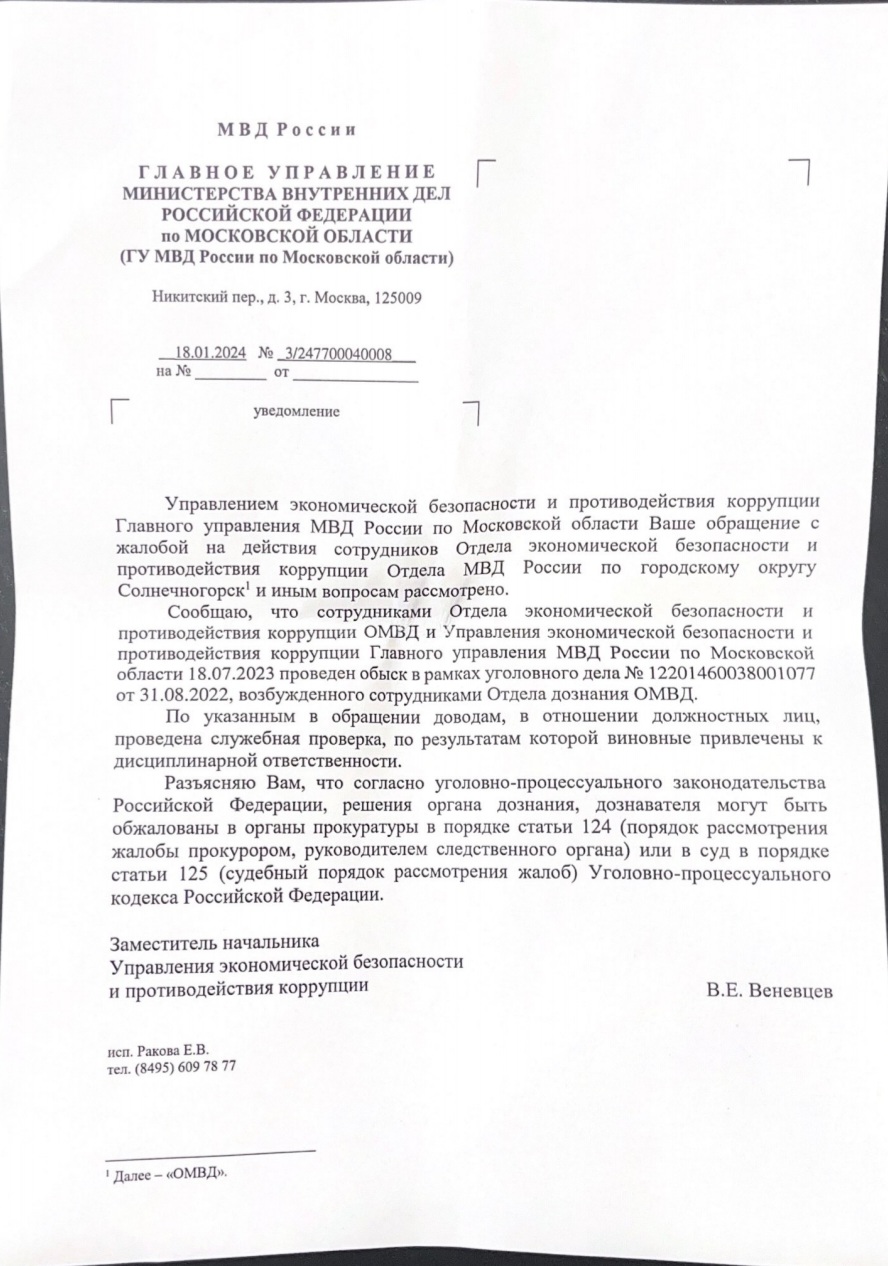
OEBiPK operatives carried out a raid

“All the issues have already been resolved by the Investigative Committee and there will be no case against “honest police officers”


Rucriminal.info talks about the arbitrariness and impunity of employees of the Department of Internal Affairs of Russia in the city district. Solnechnogorsk, Moscow region, whose actions are covered by both the former and current leadership of the Ministry of Internal Affairs. This time the focus is on the operatives of the Economic Safety and Security Commission, who carried out a raid without any reason, but were caught on a video surveillance camera.

This was in July 2023. Operatives from the Moscow region department and the Solnechnogorsk department of economic security raided the homes of individual entrepreneurs in Zelenograd and Khimki with searches. The anti-corruption fighters had in their hands a resolution of the local investigative department, under the leadership of Denis Smaznov, widely known for his corruption cases. It follows from the document that the activities are being carried out within the framework of the “allegedly” investigated criminal case No. 12201460038001077, initiated on 08/31/2022 under Part 1 of Article 171 of the Criminal Code of the Russian Federation (illegal entrepreneurship) in relation to an unidentified person who is a witness in this criminal case. In the process, BEP officers confiscated personal belongings (laptops, mobile phones), documents, seals of individual entrepreneurs, funds totaling 10 million rubles belonging to witnesses in this criminal case, most of which were received by one of the witnesses named Roman from the sale of personal real estate.


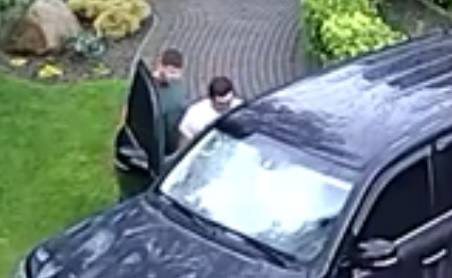
The same persons (investigators Demidov, Ozherelev and Kirillov), known thanks to the protocols for the first search, decided to quietly “search” another witness. Only they didn’t have any documents for this event. Without any resolution to do so, as well as instructions from the investigator, but only personal interest, they “out of lawlessness” conducted an inspection of a car on the territory of a household in Khimki, belonging to one of the witnesses named Roman. During these actions, these employees stole a folder with documents located in the car, which, in addition to documents, contained Roman’s personal funds in the amount of 100 thousand rubles. The employees fighting economic crimes knew about the presence of the specified amount of money in the folder, since they opened it while in the car. Then, having selfish motives, crime fighters conducting an illegal search of the car, under the guise of conducting procedural actions (search), stole this folder with personal documents and funds belonging to Roman, without including the allegedly seized items in any procedural document ! Only the actions of the police officers were recorded by CCTV cameras installed at Roman’s house.

However, even with such evidence, lawless police officers manage to avoid punishment and keep to themselves everything that was “seized.”

After these activities were carried out by employees of the Economic Security of Solnechnogorsk and the Economic Security and Commissariat of the Moscow Region, without finding evidence of involvement in the commission of a crime of the persons who were searched, on the instructions of the head of the Investigation Department of the Department of Internal Affairs Smaznov, the criminal case was suspended for failure to identify the person subject to criminal liability and safely “buried” within the walls of the Department of Internal Affairs. And the personal belongings, valuables, documents, money that were seized (and brazenly stolen) 7 months ago, which have no evidentiary value for the criminal case, have not yet been returned to their rightful owners under far-fetched pretexts.

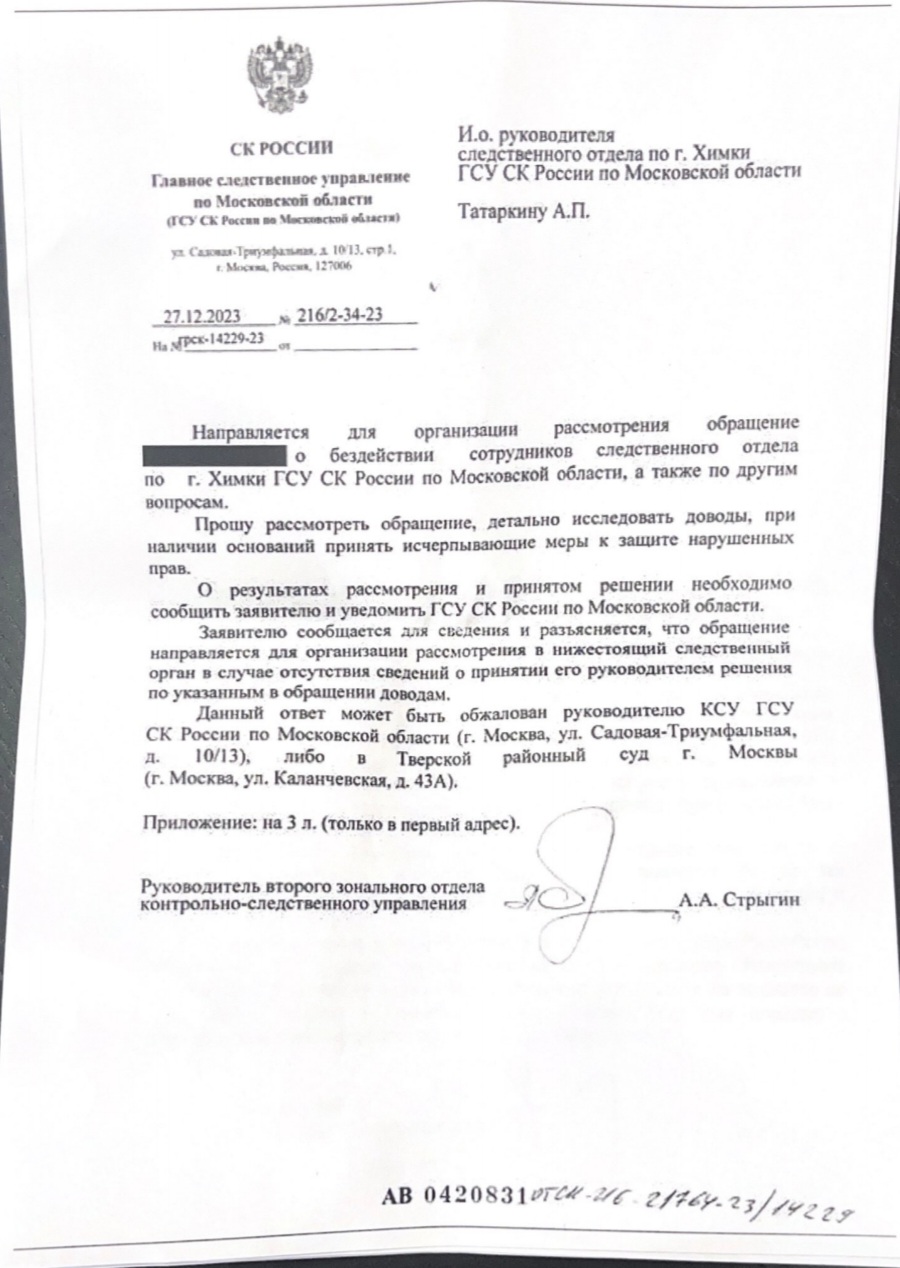
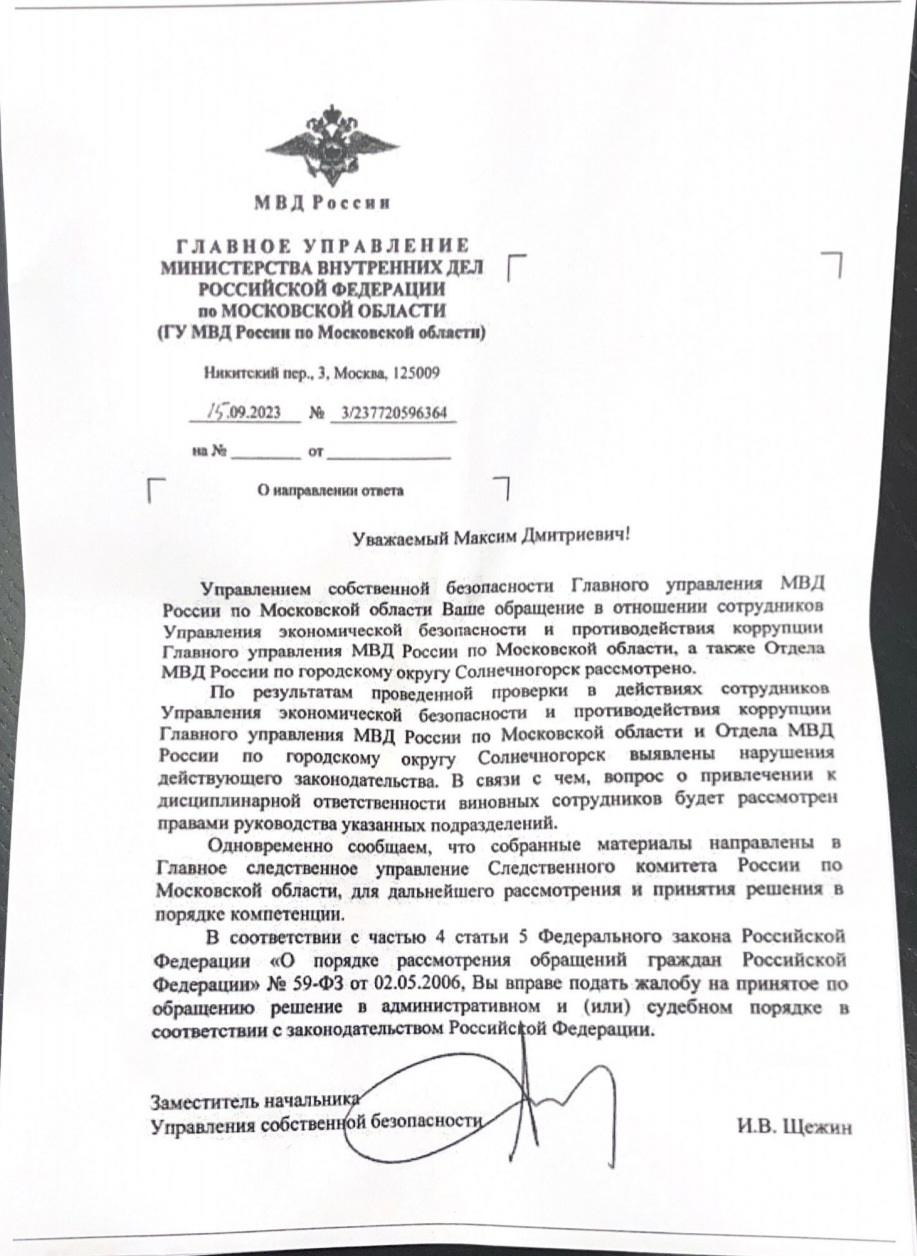
In response to repeated complaints to all supervisory authorities (USB, FSB, Investigative Committee), with the attachment of existing video recordings that capture the moment of the theft of funds, only banal replies are received, despite the fact that, after all, the employees of the Internal Security Directorate of the Main Directorate of the Ministry of Internal Affairs of Russia for the Moscow Region region, an inspection was carried out on the above circumstances, and a polygraph study was also carried out, during which the fact of theft of funds and criminal actions of economic security officers was confirmed. The results of the inspection were sent to the Investigative Committee of the Moscow Region to initiate a criminal case.

After which, the police chief of the Department of Internal Affairs for the city intervenes in the matter. Solnechnogorsk Alexey Kharkov is a friend and heir of the previous head of the Department of Internal Affairs, Alexander Sivykh, who has already lost his position twice in his career for corruption scandals, who does not hesitate to say that he has already resolved all the issues in the Investigative Committee and initiated criminal proceedings against “honest police officers” " will not be. These words of Kharkov are confirmed by the fact that for 7 months, in Bastrykin’s department, the statement and conclusion of the CSS check about the obviously committed crime by the employees are transferred from one department of the Investigative Committee to another, hiding it from legal registration and further investigation. As a result, the specified material is safely lost in the IC of the city. Khimki without a legally adopted decision.

This is how law enforcement agencies “saw” the loot from entrepreneurs. Knowing the work with workers of the former BEP from the inside, one could assume the presence of intellectual labor in the course of their activities, but now there is legalized robbery, covered up by bosses at various levels, including senior officials in the Main Directorate of the Ministry of Internal Affairs of Russia for the Moscow Region.


Yaroslav Mukhtarov

Source: www.rucriminal.info

Оперативники ОЭБиПК совершили налёт

«Все вопросы в СК уже решил и дела в отношении «честных полицейских» не будет»


Rucriminal.info рассказывает о произволе и безнаказанности сотрудников ОМВД России по г.о. Солнечногорск Московской области, действия которых прикрывает как бывшее, так и действующее руководство МВД. На этот раз в центре внимания оперативники ОЭБиПК, которые совершили налёт без всяких на то оснований, но попались на камеру видеонаблюдения.

Дело было в июле 2023 года. Оперативники подмосковного управления и солнечногорского отдела экономической безопасности нагрянули с обысками к индивидуальным предпринимателям в жилища на территории Зеленограда и Химок. На руках у борцов с коррупцией было постановление местного следственного отдела, под руководством широко известного своими коррупционными делами Дениса Смазнова. Из документа следует, что мероприятия проводятся в рамках «якобы» расследуемого уголовного дела № 12201460038001077, возбужденного ещё 31.08.2022 по ч.1 ст.171 УК РФ (незаконное предпринимательство) в отношении неустановленного лица, которые по данному уголовному делу являются свидетелями. В процессе бэповцы изъяли личные вещи (ноутбуки, мобильные телефоны), документы, печати ИП, денежные средства на общую сумму 10 миллионов рублей, принадлежащие свидетелям данного уголовного дела, большая часть из которых, была получена одним из свидетелей по имени Роман от продажи личной недвижимости.


Те же лица (оперуполномоченные Демидов, Ожерельев и Кириллов), известные благодаря протоколам по первому обыску, решили под сурдинку «обыскать» ещё одного свидетеля. Только вот каких-либо документов у них на это мероприятие не было. Не имея на то никакого постановления, а также поручения следователя, а только лишь личную заинтересованность, «по беспределу» провели досмотр автомобиля на территории домовладения в Химках, принадлежащего одному из свидетелей по имени Роман. В ходе данных действий указанные сотрудники похитили папку с документами, находящуюся в салоне автомобиля, в которой помимо документов, находились личные денежные средства Романа в сумме 100 тысяч рублей. О наличии в папке указанной суммы денежных средств, сотрудники, борющиеся с экономическими преступлениями, знали, так как, находясь в салоне автомобиля, открыли ее. Затем, имея корыстные мотивы, борцы с преступностью, проводящие незаконный досмотр автомобиля, прикрываясь проведением процессуальных действий (обыском), похитили данную папку с личными документами и денежными средствами, принадлежащими Роману, при этом, не внеся, якобы изъятое, ни в один процессуальный документ! Только вот действия сотрудников полиции были зафиксированы камерами видеонаблюдения, установленными на доме Романа.

Однако даже при таких доказательствах, полицейским-беспредельщикам удаётся избегать наказания и удерживать при себе все, что было «изъято».

После проведения данных мероприятий сотрудниками Экономической безопасности Солнечногорска и УЭБиПК Московской области, не найдя доказательств причастности к совершению преступления лиц, у которых были произведены обыска, по указанию начальника Следственного отдела ОМВД Смазнова, уголовное дело было приостановлено за неустановлением лица, подлежащего привлечению к уголовной ответственности и благополучно «похоронено» в стенах ОМВД. А изъятые, (и нагло похищенные) 7 месяцев назад, личные вещи, ценности, документы, денежные средства, не имеющие никакого доказательного значения для уголовного дела, до настоящего времени, под надуманными предлогами не возвращены законным владельцам.

На неоднократные жалобы во все надзирающие инстанции (УСБ, ФСБ, СК), с приложением имеющихся видеозаписей, на которых запечатлён момент хищения денежных средств, поступают лишь банальные отписки, не смотря на то, что все-таки, сотрудниками УСБ ГУ МВД России по Московской области была проведена проверка по вышеуказанным обстоятельствам, а также проведено исследование на полиграфе, в ходе которого подтвердился факт хищения денежных средств и преступные действия сотрудников экономической безопасности. Результаты проверки были направлены в СК Московской области для возбуждения уголовного дела.

После чего, в дело вмешивается начальник полиции ОМВД по г.о. Солнечногорск Алексей Харьков – друг и наследник предыдущего начальника ОМВД Александра Сивых, который уже дважды за свою карьеру, расставался с должностью за коррупционные скандалы, который, не стесняясь говорит, что все вопросы в СК он уже решил и возбуждения уголовного дела в отношении «честных полицейских» не будет. Данные слова Харькова подтверждаются тем, что на протяжении 7 месяцев, в ведомстве Бастрыкина, заявление и заключение проверки УСБ о явно совершенном преступление сотрудниками перекидывают из одного отдела СК в другой, укрывая его от законной регистрации и дальнейшего расследования. В итоге, указанный материал благополучно теряется в СК г.о. Химки без законного принятого решения.

Вот так вот в правоохранительных органах «пилят» награбленное у предпринимателей. Зная работу сотрудников бывшего БЭПа изнутри, можно было предположить наличие интеллектуального труда в ходе их деятельности, но сейчас на лицо узаконенный разбой, покрываемый начальниками разного уровня, включая высших лиц в ГУ МВД России по Московской области.


Ярослав Мухтаров

Источник: www.rucriminal.info

среда, 28 февраля 2024 г.

The FSB roof did not help the hackers

A high-ranking counterintelligence officer is being tried for a bribe of 100 million rubles


As it became known to Rucriminal.info, the 235th Garrison Military Court refused to accept a complaint from a witness in a criminal case against the leading officer of the Russian FSB Directorate for the Perm Territory, Grigory Tsaregorodtsev (head of the department of the Perm Directorate of the FSB, which carries out activities in the field of information security) for the arrest of large sums of money. and gold bars. Liya Sagadeeva asked to cancel the arrest of 4.5 million rubles, 154.5 thousand dollars and 100 gold bars belonging to her. The complaint alleged, in particular, that during the search the witnesses were directly subordinate to the investigator and were actually absent during the investigative action. According to Sagadeeva, other procedural violations were also committed.

The seized money and bullion were recognized as material evidence in the Tsaregorodtsev case. The court concluded that the witness “is not deprived of the opportunity to make a corresponding request during the criminal proceedings against” the FSB officer, and the demands put forward in her complaint “can currently be the subject of verification only during the criminal proceedings, as well as when considering a case by a court of appeal or cassation.”


The criminal case against Tsaregorodtsev is being considered by the Perm Garrison Military Court. The next meeting is scheduled for March 4. The FSB officer was charged under Part 6 of Art. 290 of the Criminal Code of the Russian Federation (receiving a bribe on an especially large scale). As previously reported by the Cheka-OGPU, Tsaregorodtsev, who headed the department in the field of information security, received about 150 million rubles for concealing the activities of a group of hackers.

Earlier, the telegram channel VChK-OGPU reported that the head of the Perm FSB department, Grigory Tsaregorodtsev, who was arrested for a 100 million bribe, protected a large hacker group that traded information from bank cards. They paid him for his patronage, and then gave him 100 million rubles for their release.


In February 2022, it became known about the defeat of another gang of hacker carders. 6 members of the group were detained: businessman Vladislav Gilev, founder of a large company selling metal structures Artem Bystrykh, general director of the Saratovfilm Film Company Denis Pachevsky, businessman Alexander Kovalev, unemployed Yaroslav Solovyov and the head of the famous Perm IT office Get-Net Artem Zaitsev. The Tverskoy Court of Moscow arrested all six suspects in case No. 12201007754000092, initiated under Article 187 Part 2 - illegal circulation of payment funds.

As the Cheka-OGPU managed to find out, the hackers sold data from European and American cards and also stole money from them. The work was carried out through two sites - trump-dmps.ru and fe-accl8.ru. Traffic from them went to the data center, the base of which belongs to Zaitsev’s Get-Net LLC. In Perm, he is a well-known programmer, and his company supplies services to the local FSB. For example, in 2016, security officers purchased communication channels from Zaitsev, and the following year they rented premises.

After the arrest of the hackers, investigators from the Ministry of Internal Affairs began to notice a strange interest in the topic on the part of the head of the FSB department for the Perm Territory. Grigory Tsaregorodtsev tried in every possible way to transfer the detainees to the Perm pre-trial detention center under the pretext of carrying out certain events. It turned out that Tsaregorodtsev acted as a “roof” for a group of hackers in exchange for monthly payments.

Moreover, a classified witness in the case: the girl said that Vladislav Gilev, who previously headed the trade and construction company Uralenergostroy (one of the partners of Transtechcom Bystrykh), gave Tsaregorodtsev 100 million rubles in cash. The transfer was carried out by their mutual friend, Gilev’s business partner, Alexander Kovalev. Also, according to the witness, through her Tsaregorodtsev tried to calm the hackers, claiming that he was making every effort to get them out of prison. However, after a year behind bars and multiple court rejections of defense motions and appeals regarding mitigation of the preventive measure, the detainees allegedly decided to “dump” their curator and betrayed the fact of transferring money intended to bribe investigators.

According to the Cheka-OGPU, Tsaregorodtsev protected these same hackers for seven years, primarily the group of Kovalev and Gilev. Moreover, they didn’t just give him money every month, the cybercriminals helped him, using someone else’s passport data, vacation with his whole family in the best hotels in Russia (not allowed to travel abroad).

In 2015, having started receiving money for patronage in order to justify where expensive real estate and cars suddenly began to appear in the family, Tsaregorodtsev opened Resurs LLC (TIN 5908007183) in the name of his wife’s father, his father-in-law Tsitko Sergei Stanislavovich (TIN 5908007183), through which he cashed out money and bought real estate , cars, registering for father-in-law and mother-in-law.

So, since 2015, they have had Lexus cars for all the women in the family (Tsaregorodtsev’s mother, sister, wife, mother-in-law). My father-in-law has two Mercedes, Tsaregorodtsev himself has a Jaguar, then a Range Rover.

Also, two private houses were purchased for the father-in-law. oma in the elite village of Ust-Tary on the Kama River.

During the search, Tsaregorodtsev was found to have a collection of expensive pens and watches, as well as valuables worth 25 million rubles.

The relationship with hackers of a high-ranking employee of the FSB of the Russian Federation grew into a friendly one; they communicated as families and spent weekends together. When the hackers were imprisoned by investigators from Moscow, they gave Tsaregorodtsev 100 million rubles for him to organize their transfer to Perm and release. And they waited for a long time - a year - for help, but they don’t abandon friends. But they didn’t receive it from Tsaregorodtsev. After this, they decided to write statements about giving a bribe, for which the preventive measure for them was replaced from being in a pre-trial detention center to house arrest.

Timofey Grishin

Source: www.rucriminal.info